Maintenance Tips

The Cost of Misalignment: How Coupling Errors Damage Airend Bearings

Air Compressor Coupling Errors Damage Airend Bearings
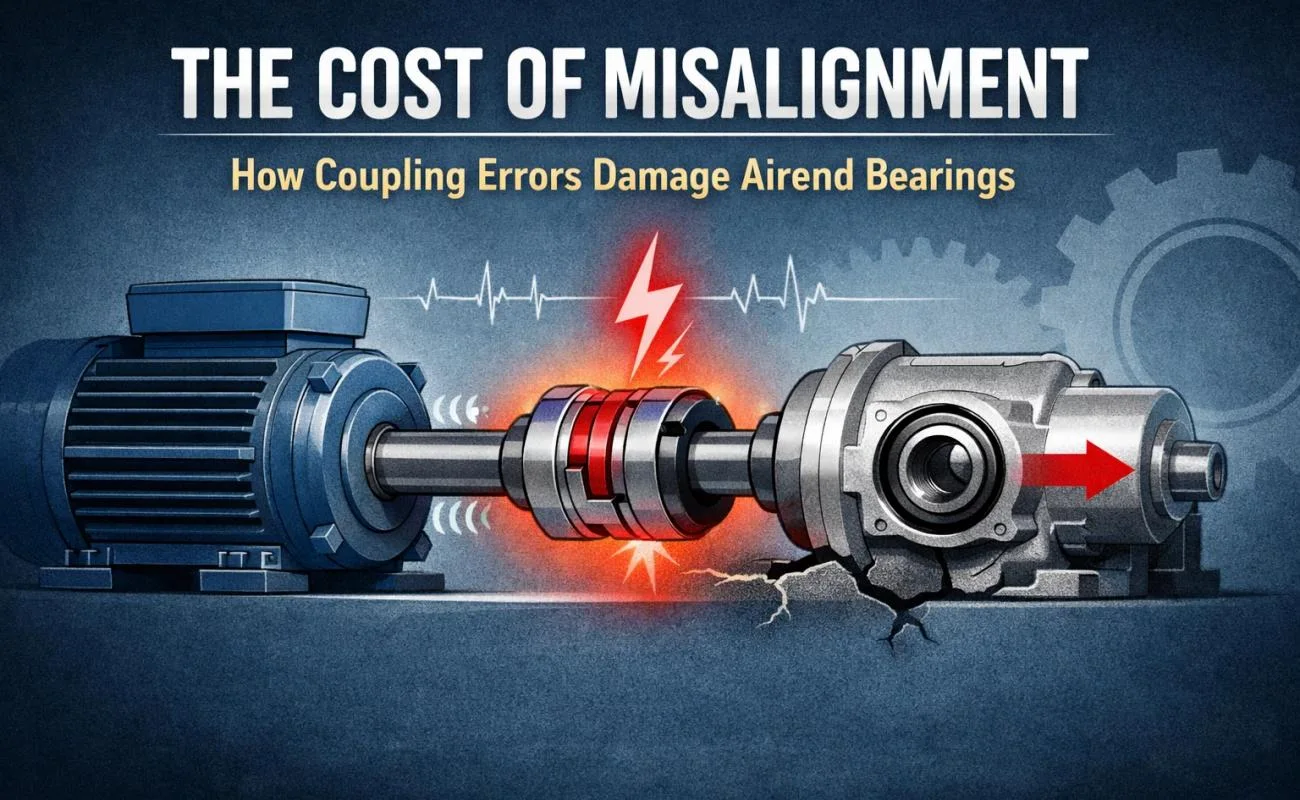
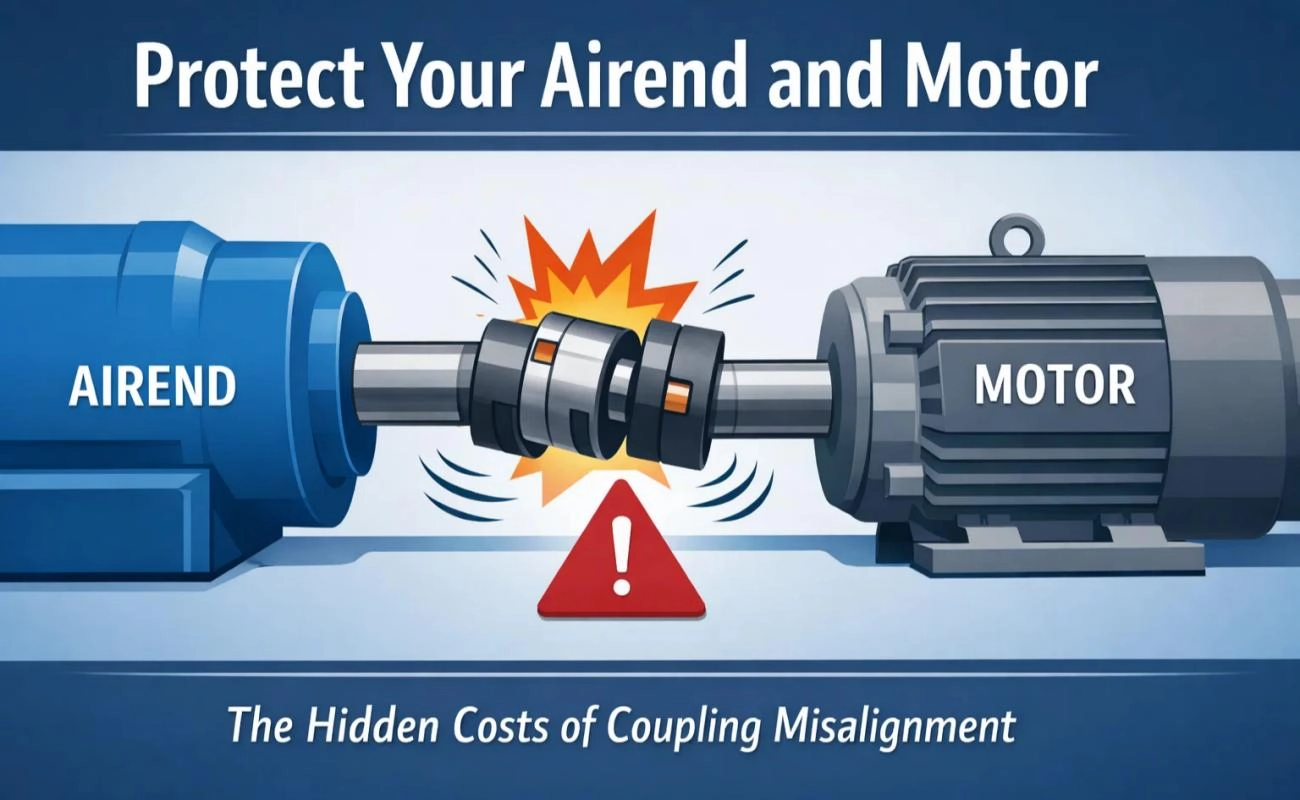
In rotary screw air compressors, the connection between the motor and the airend is often taken for granted. As long as power is transmitted and the machine runs, the coupling is assumed to be functioning correctly.

However, beneath this seemingly simple connection lies one of the most critical—and frequently overlooked—sources of mechanical failure: coupling misalignment.

Even minor installation errors can introduce significant forces into the system. Over time, these forces do not just cause vibration—they can generate axial thrust that directly damages the airend bearings, leading to premature failure and costly repairs.

The Role of the Coupling in Power Transmission

A coupling connects the motor shaft to the airend shaft, transmitting torque while accommodating small misalignments and vibrations. In theory, couplings are designed to be flexible enough to compensate for minor installation imperfections.

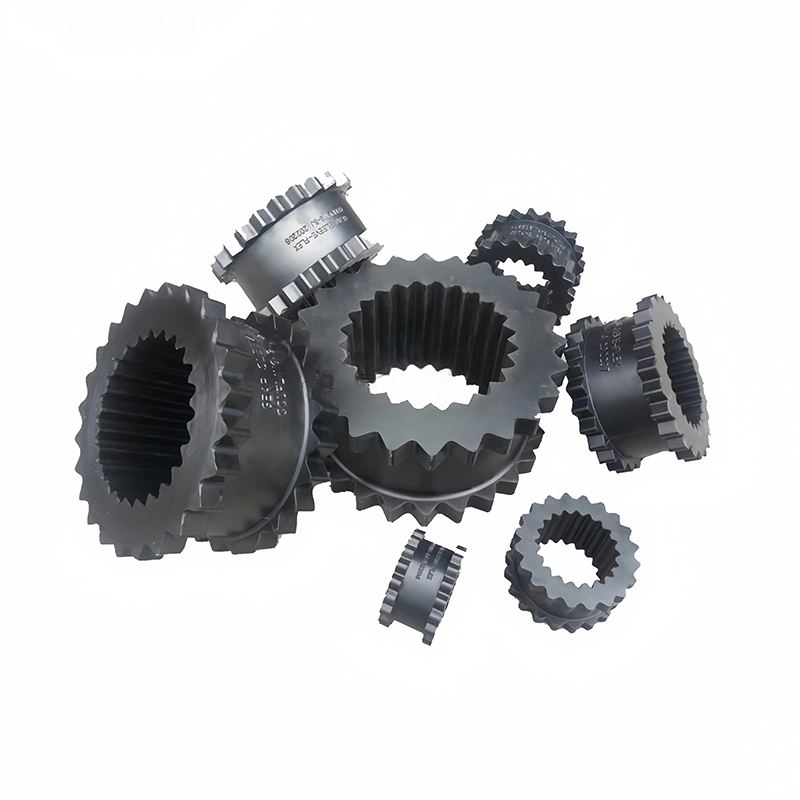
Common types used in compressors include:

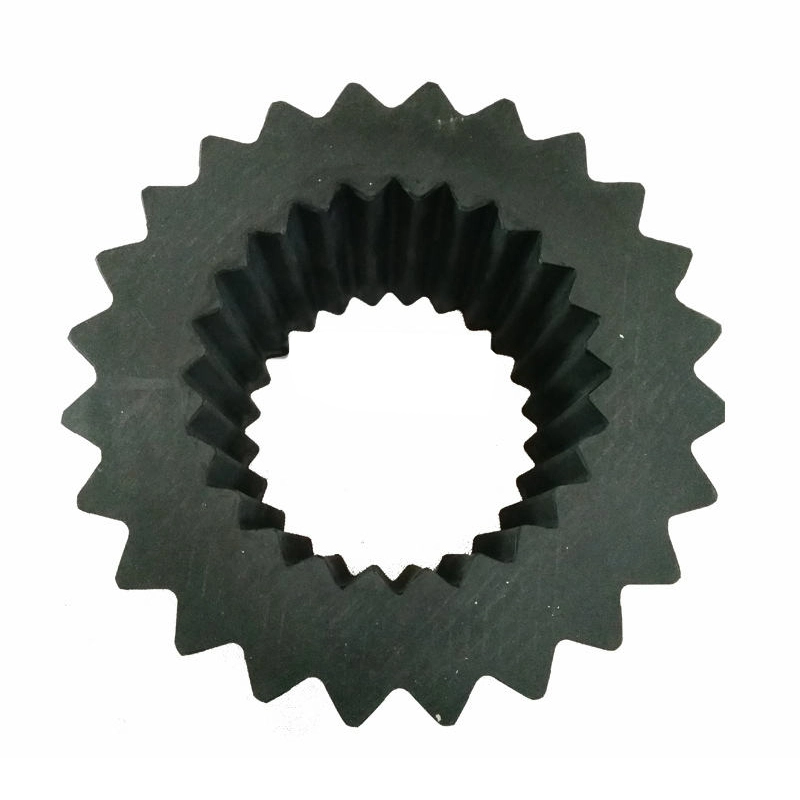
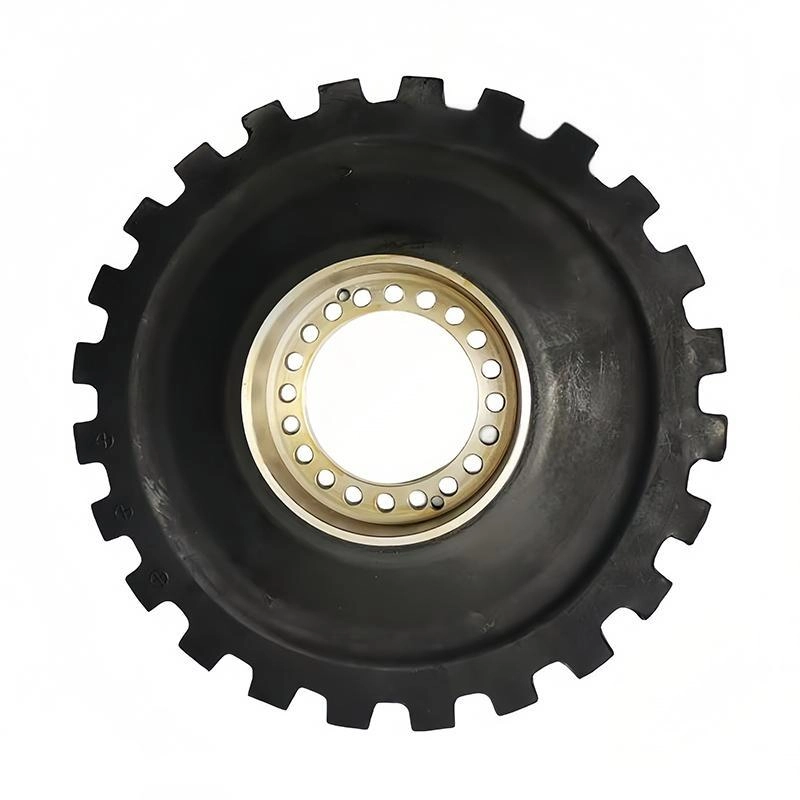
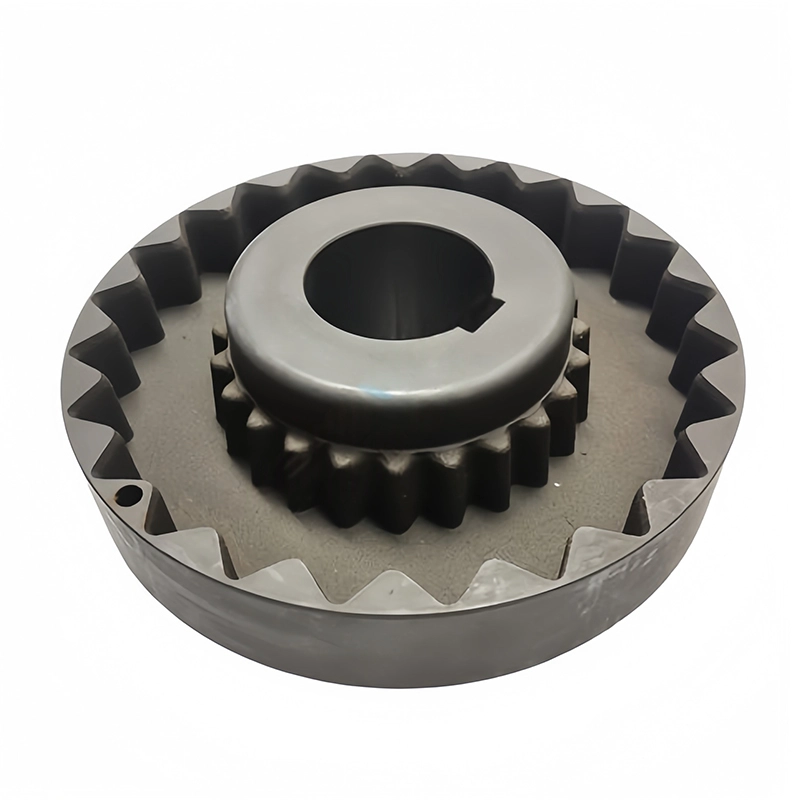
  • Elastic couplings (with rubber or polymer elements)
  • Gear couplings
  • Disc couplings

Their purpose is not only to transmit rotational force but also to protect the system from excessive mechanical stress.

However, this protection only works within a limited tolerance range.

What Is Misalignment and Why Does It Matter?

Misalignment occurs when the motor shaft and airend shaft are not perfectly aligned along the same axis. This can take several forms:

  • Angular misalignment (shafts meet at an angle)
  • Parallel misalignment (shafts are offset but parallel)
  • Axial misalignment (incorrect spacing along the shaft axis)

Even a small deviation—such as 1 mm of offset—may seem negligible during installation. But at operating speeds of 3000 RPM or higher, this small error is amplified into a continuous mechanical disturbance.

Instead of smooth rotation, the system experiences cyclic loading and uneven force distribution.

From Misalignment to Axial Thrust

One of the most damaging consequences of misalignment is the generation of axial thrust.

In a properly aligned system, rotational forces are transmitted evenly along the shaft. Bearings are designed to handle specific radial and axial loads within defined limits.

When misalignment occurs:

  • The coupling no longer transmits torque evenly
  • Rotational forces become unbalanced
  • Additional forces are introduced along the shaft axis

These forces effectively push and pull the airend shaft during operation.

Over time, this repeated axial loading places excessive stress on the bearings, particularly those not designed to handle high axial loads.

The Impact on Airend Bearings

Airend bearings are precision components designed to maintain rotor positioning and ensure proper clearances within the compression chamber.

When subjected to abnormal axial thrust, several failure modes may occur:

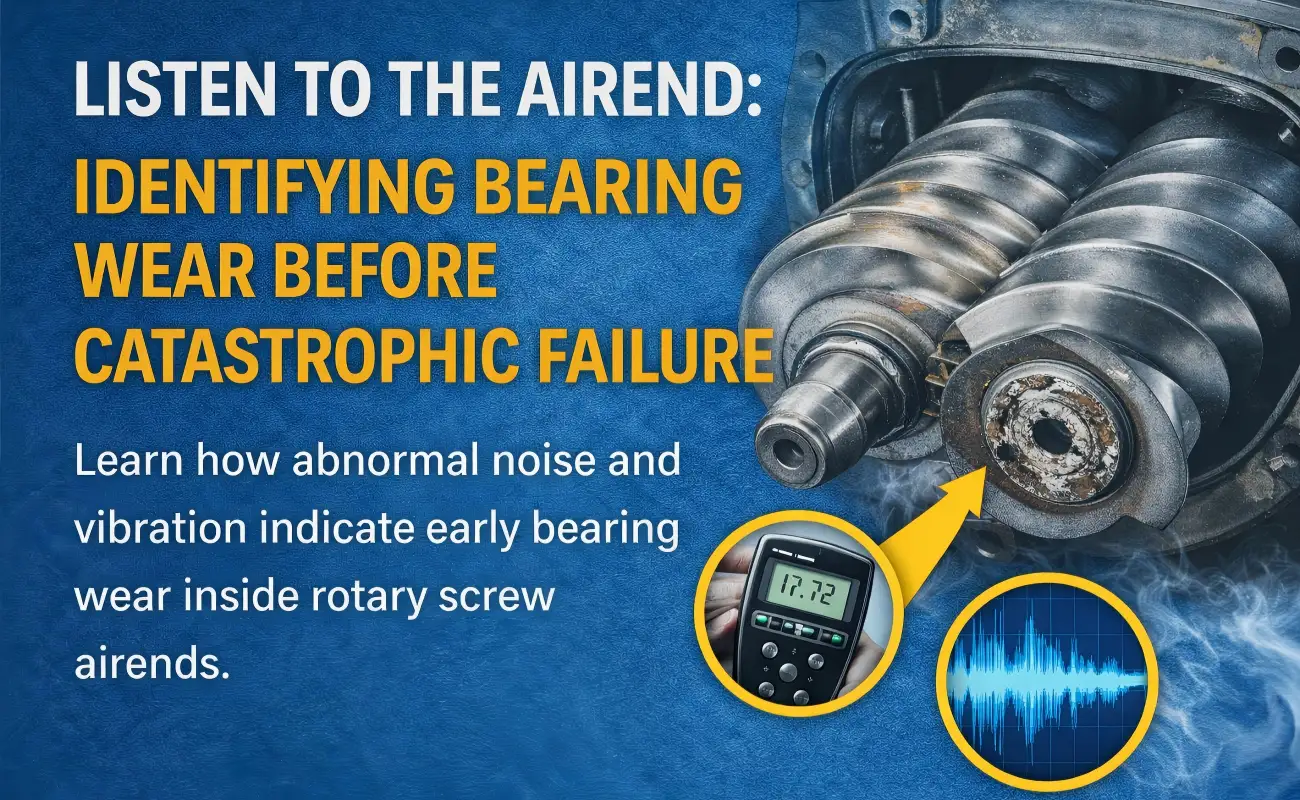
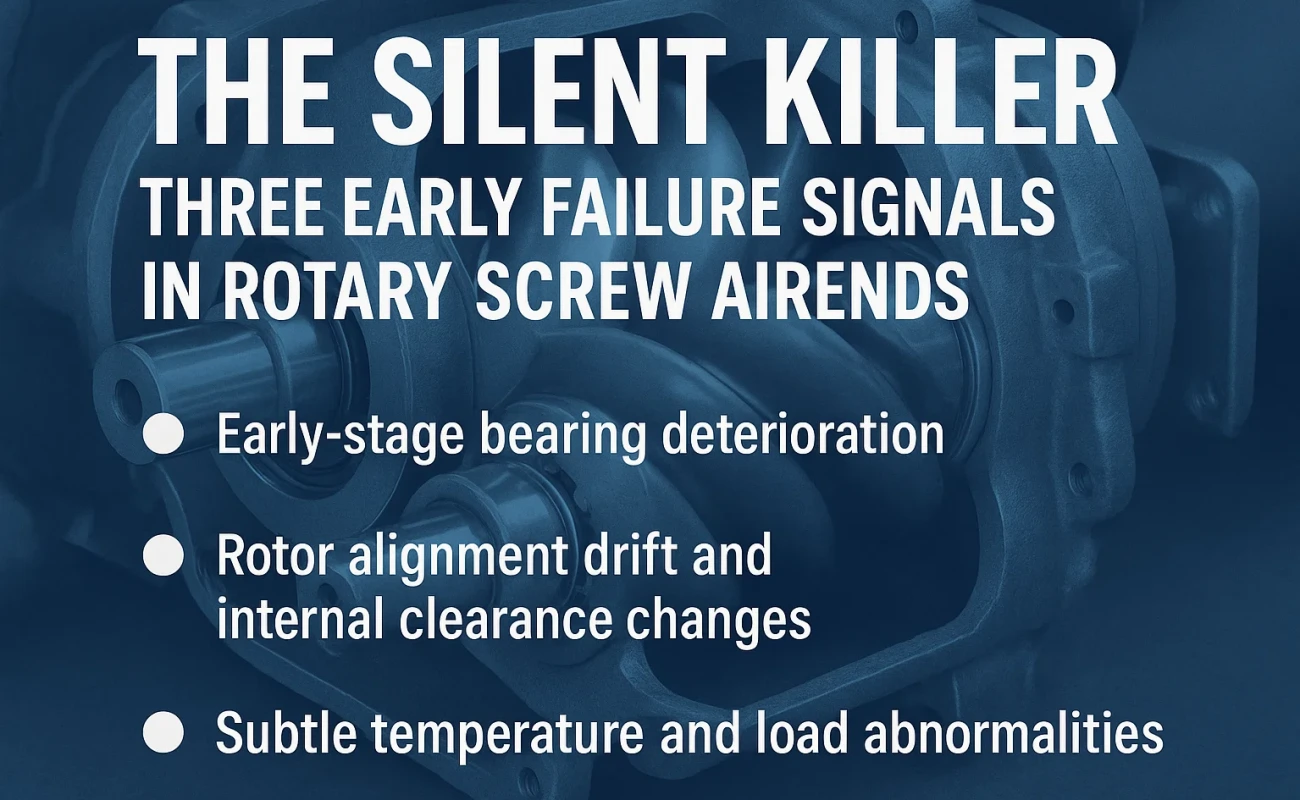
  • Accelerated Bearing Wear
    Excessive axial force increases contact stress between rolling elements and raceways, leading to premature wear.
  • Heat Generation
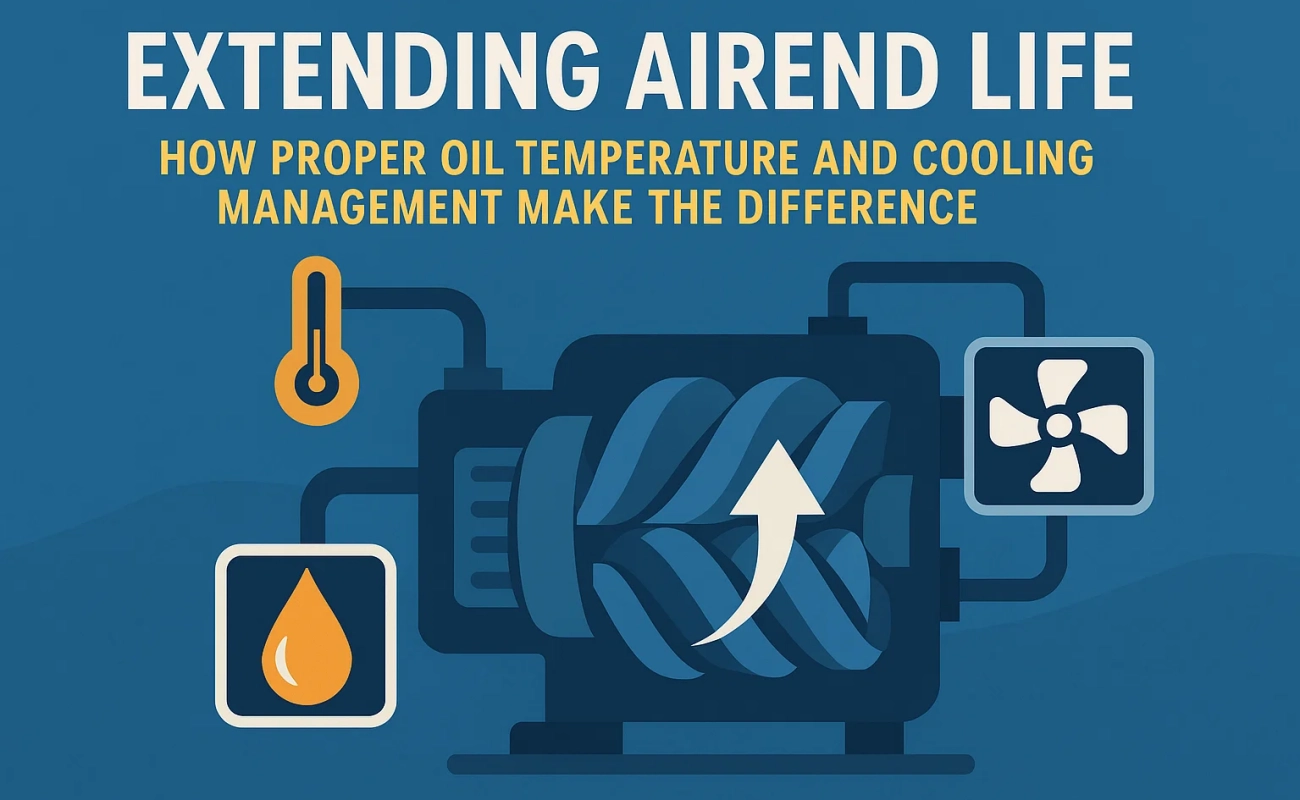
    Additional friction raises operating temperatures, which degrades lubrication and accelerates material fatigue.
  • Loss of Rotor Clearance
    As bearings wear unevenly, rotor alignment inside the airend shifts, reducing internal clearances and increasing the risk of rotor contact.
  • Catastrophic Failure
    In severe cases, bearing failure can lead to rotor seizure, causing extensive damage to the airend.

What begins as a small alignment error can ultimately result in a complete airend overhaul.

Why High Speed Makes It Worse

At high rotational speeds, the effects of misalignment are magnified.

At 3000 RPM:

  • A misaligned shaft completes 50 rotations per second
  • Each rotation introduces cyclic stress
  • Vibrational forces accumulate rapidly

This constant repetition means that even small misalignment errors quickly translate into significant mechanical damage.

In practical terms, what appears to be a “minor” installation issue becomes a continuous source of destructive force.

Warning Signs of Coupling Misalignment

Operators and maintenance teams should be alert to early indicators of misalignment:

  • Increased vibration levels
  • Unusual noise near the coupling area
  • Elevated bearing temperatures
  • Premature wear of coupling elements (rubber inserts, discs, etc.)
  • Frequent bearing failures without obvious cause

Ignoring these signs can lead to more severe and expensive problems over time.

Best Practices for Proper Alignment

Preventing misalignment begins during installation and maintenance.

Key practices include:

  • Precision Alignment Tools
    Use dial indicators or laser alignment systems to ensure accurate shaft positioning.
  • Regular Inspection
    Check alignment periodically, especially after major maintenance or component replacement.
  • Monitoring Coupling Wear
    Worn coupling elements may indicate underlying alignment issues.
  • Controlling Thermal Expansion
    Consider how temperature changes affect alignment during operation.

Even well-aligned systems can drift over time due to foundation settling or thermal effects.

The Cost of Neglect

Compared to the cost of replacing airend bearings—or worse, the entire airend—proper alignment is a low-cost preventive measure.

Ignoring alignment can result in:

  • Increased maintenance frequency
  • Unexpected downtime
  • Higher energy consumption due to inefficiency
  • Expensive component replacement

In many cases, the root cause of repeated bearing failure can be traced back to alignment issues that were never properly addressed.

Conclusion: Precision Alignment Protects Your Entire System

The coupling is more than just a connector—it is a critical interface that determines how forces are transmitted throughout the compressor system.

Misalignment introduces hidden forces that quietly damage bearings and compromise system reliability. By ensuring precise alignment and regularly monitoring coupling condition, operators can significantly extend the life of their airend and reduce maintenance costs.

In high-speed machinery, precision is not optional. Even the smallest deviation can have the largest consequences.