News
Hidden Mechanics That Keep Your Air Compressor Stable: Couplings, Oil Level Gauges, and More
In modern industrial air compressors, attention is often focused on large, high-value components such as the airend, motor, or inverter. Yet many of the most costly failures do not begin inside these headline parts. They start in small, overlooked mechanical details — a misaligned coupling, a cloudy oil level gauge, or a worn gas spring that no longer holds position. These components rarely trigger alarms, but when they fail, they quietly destabilize the entire machine.
Understanding these mechanical interfaces is not just about maintenance. It is about protecting the airend, preserving efficiency, and avoiding the kind of vibration, oil starvation, and fatigue damage that leads to catastrophic breakdowns.
The coupling: where torque meets alignment
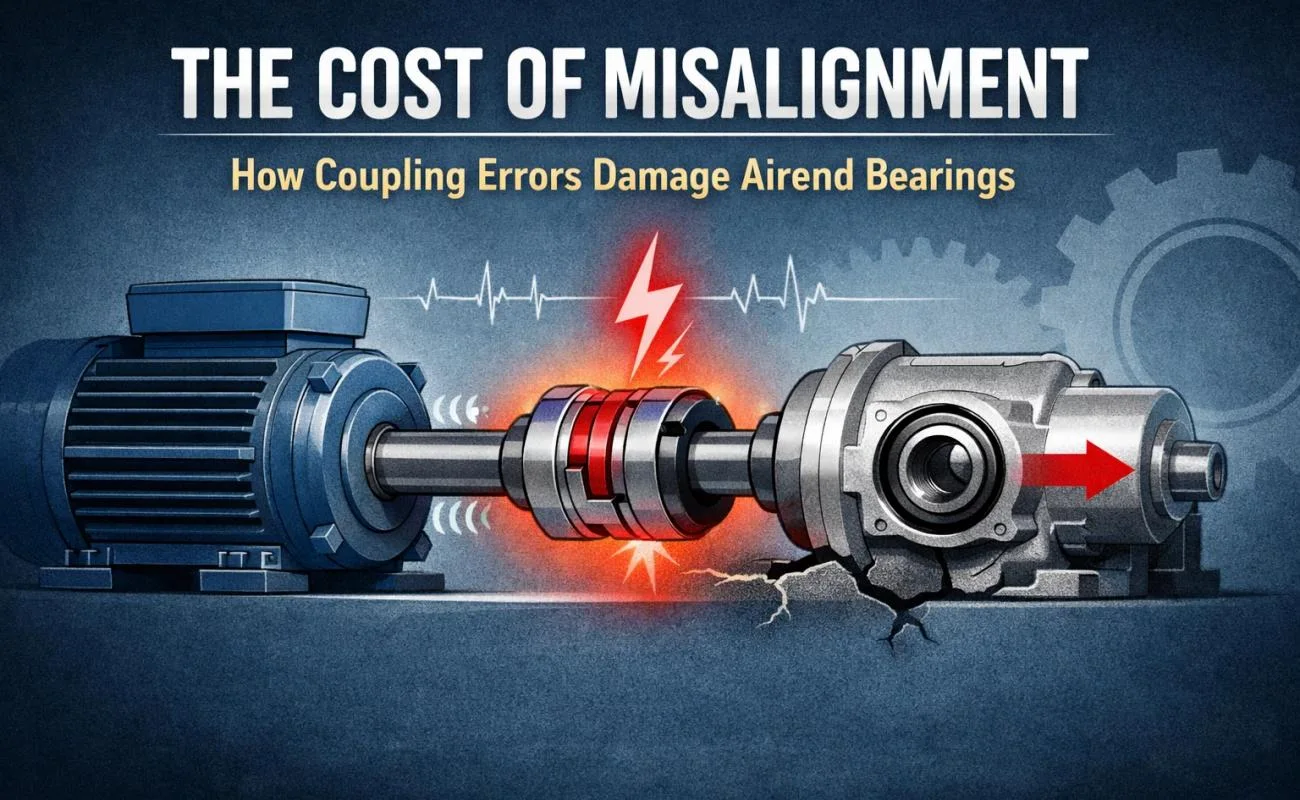
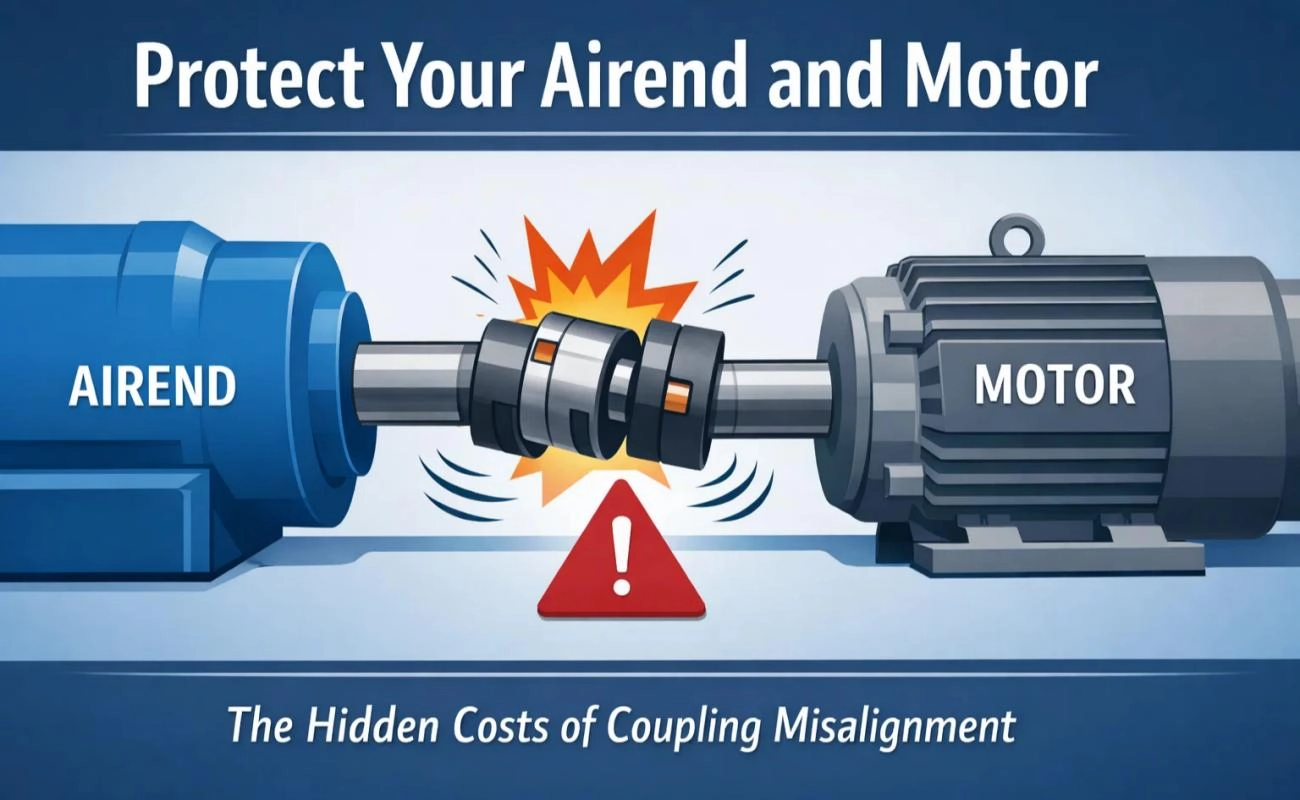
The coupling sits between the motor and the airend, transmitting torque while absorbing small misalignments and vibration. On paper, it is simple. In real machines, it is one of the most critical links in the drivetrain.
Even a small alignment error between the motor shaft and airend shaft forces the coupling to work harder. Instead of smoothly transferring power, it begins to flex with every rotation. This generates heat, increases torsional vibration, and introduces cyclic loads into the airend bearings. Over time, this vibration accelerates bearing wear and can even damage rotor clearances inside the airend.
Many compressors that “mysteriously” develop bearing noise or premature airend failure are later found to have had poor coupling alignment. A flexible coupling can mask the problem for a while, but it cannot eliminate the physics. If the shafts are not coaxial, the airend pays the price.
Proper coupling selection also matters. Undersized or low-quality couplings harden, crack, or lose elasticity when exposed to oil mist and heat. Once they lose their damping capability, vibration travels straight into the airend and motor bearings.
Vibration: the hidden messenger
Misaligned or worn couplings are one of the most common sources of low-frequency vibration in rotary screw compressors. Unlike airflow or pressure faults, vibration often goes unnoticed until mechanical damage has already started.
Excess vibration affects more than comfort. It causes fastener loosening, micro-cracks in mounting frames, and fatigue in piping and fittings. Over time, this can lead to oil leaks, air leaks, and electrical connector failures.
From a reliability standpoint, keeping the coupling healthy and aligned is one of the most effective ways to protect the entire machine.
Oil level gauges: a small window into a big risk
The oil level gauge is one of the most underestimated components in a compressor. Operators glance at it during routine checks, but its accuracy and visibility are often taken for granted.
In reality, a cloudy, stained, or cracked oil sight glass can be as dangerous as a faulty sensor. If the oil level cannot be clearly seen, operators may run the machine with too little oil — or worse, assume the level is correct when it is not.
Low oil level does not always cause immediate shutdown. Instead, it leads to reduced lubrication, higher oil temperatures, and accelerated wear in airend bearings and rotors. The damage happens quietly, and by the time vibration or noise appears, the repair cost is already high.
High-quality oil level gauges are made with oil-resistant materials, clear optical surfaces, and strong seals that do not degrade under heat. Cheap plastic gauges often turn yellow, craze, or leak after a few months of exposure to compressor oil and temperature cycles.
Visual monitoring is still one of the best tools
Even in highly automated systems, visual checks remain irreplaceable. A reliable oil level gauge allows operators to detect:
- Oil foaming from air leaks or contamination
- Gradual oil loss from separator or pipe leaks
- Overfilling that may lead to oil carryover
When this visual feedback is lost, the compressor becomes blind to one of its most critical conditions.
Gas springs and access panels: small parts, real consequences
Gas springs are commonly used on soundproof enclosures, service doors, and access panels. When they weaken, panels no longer stay open or closed properly. This might sound like a minor inconvenience, but in practice it affects both safety and cooling.
A loose or partially open enclosure panel disrupts airflow through the cooling system. Hot air may recirculate inside the cabinet, raising oil and discharge temperatures. At the same time, a panel that will not stay open makes routine inspection and service more difficult, encouraging operators to skip checks.
In high-duty compressors, even small airflow disturbances can lead to temperature drift that reduces oil life and stresses the airend.
Mechanical stability protects airend life
When couplings, gauges, and support components are working properly, they create a stable operating environment for the airend. The shafts stay aligned, oil flows correctly, and temperature remains under control.
When these components are neglected, instability creeps in. Vibration increases bearing load. Poor oil visibility leads to lubrication mistakes. Cooling airflow becomes unpredictable. All of these factors shorten airend life — even if the airend itself is perfectly manufactured.
From a system perspective, mechanical stability is not a luxury. It is a requirement.
What proactive operators do differently
Experienced maintenance teams treat these “small” components as critical parts of the reliability chain. They regularly check coupling alignment, replace couplings on schedule, keep oil level gauges clean and readable, and ensure enclosure hardware works as designed.
This approach costs little compared to an airend rebuild, but it can add years of service life to a compressor.
Final thought
In compressed air systems, big failures often start with small oversights. The coupling that slowly drifts out of alignment, the oil level gauge that turns cloudy, or the gas spring that no longer seals the cabinet — these are not minor details. They are early warning signs.
By paying attention to these hidden mechanics, you protect the components that truly matter, keep vibration under control, and give your compressor the stable environment it needs to run efficiently for years.