

News
Cleaning and Maintaining Your Air/Oil Cooler for Maximum Efficiency

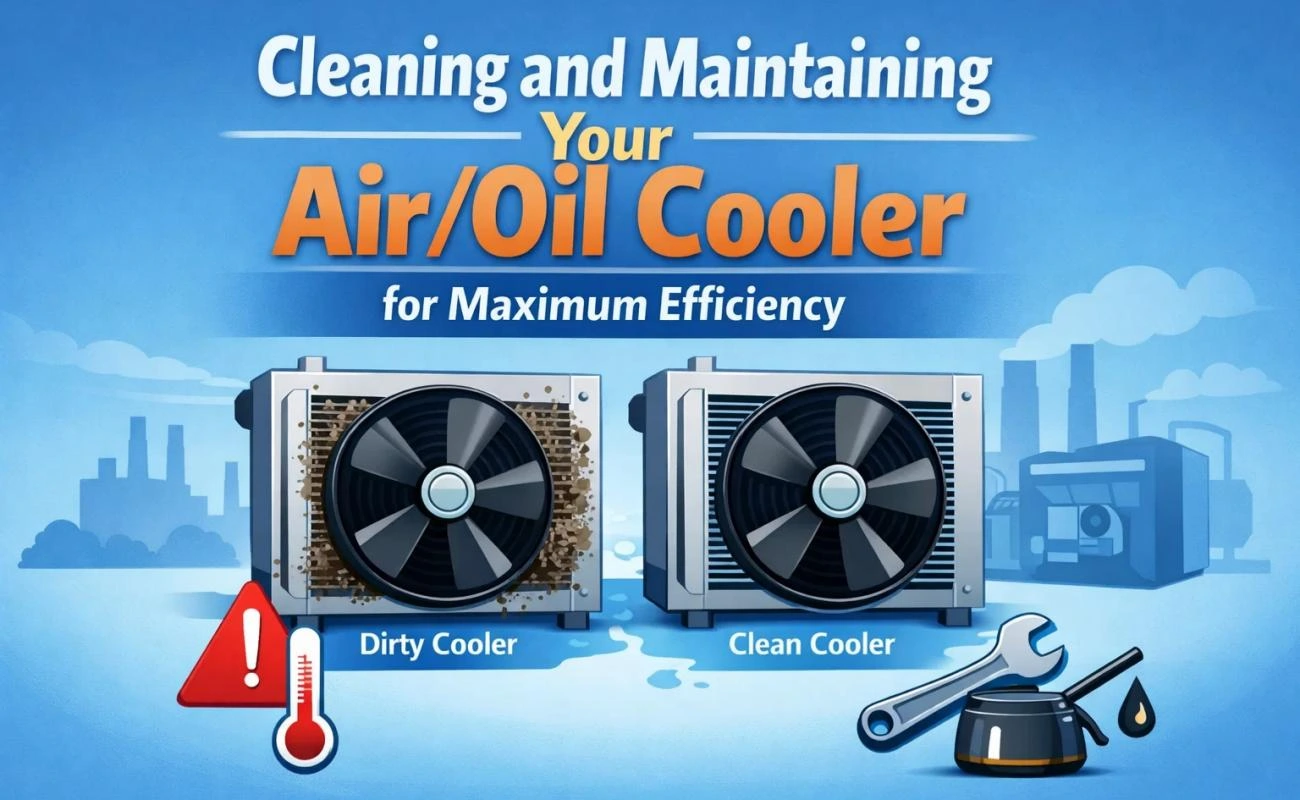
Many compressor operators notice symptoms like rising discharge temperature, frequent high-temperature alarms, or increased shutdowns, yet often overlook one of the most common causes: cooler efficiency loss.
Air compressors rely heavily on efficient heat exchange. When coolers become clogged internally or externally, the system loses its ability to remove heat from compressed air and lubricating oil. The result is higher operating temperature, degraded lubricant performance, and increased mechanical wear.
In industrial environments where compressors operate continuously, poor cooler maintenance can gradually turn into costly downtime and higher energy bills.
Understanding how fouling occurs—and how to properly maintain coolers—helps businesses protect both productivity and equipment investment.
Why Cooler Performance Matters in Compressor Systems
In oil-injected screw compressors, the cooler performs two critical tasks:
- Cooling compressed air before delivery to the system
- Cooling lubricating oil before it returns to the airend
If cooling performance drops, oil temperature rises. High oil temperature reduces viscosity, weakening lubrication and increasing bearing and rotor wear.
At the same time, elevated discharge air temperatures may affect downstream dryers and filters, reducing air quality and potentially damaging pneumatic equipment.
Simply put, cooling efficiency directly affects compressor reliability and energy efficiency.
External Blockage: The Most Common but Overlooked Issue
In air-cooled systems, coolers work similarly to radiators. Ambient air passes through fins to remove heat. Over time, dust, oil mist, and workshop contaminants accumulate on the cooler surface.
Common blockage sources include:
- Dust and textile fibers in manufacturing plants
- Oil mist mixed with dirt in heavy industries
- Metal particles in machining environments
Once airflow becomes restricted, heat exchange efficiency drops sharply.
Routine maintenance should include:
- Regular compressed air blowing from inside out
- Low-pressure washing where applicable
- Inspection of fan operation and airflow paths
However, external cleaning alone is often not enough.
Internal Fouling: The Hidden Efficiency Killer
While external clogging is visible, internal fouling is harder to detect but often more damaging.
In oil coolers, deposits may form due to:
- Oil degradation and carbon formation
- Contaminated lubricant
- Extended oil change intervals
In water-cooled systems, scale buildup and corrosion inside tubes reduce heat transfer efficiency.
Internal fouling symptoms include:
- Gradually increasing oil temperature
- Reduced cooling performance despite external cleaning
- Frequent overheating alarms under heavy load
Addressing this requires chemical cleaning or professional flushing to restore heat transfer capability.
Differences Between Air-Cooled and Water-Cooled Systems
Understanding cooler types helps plan maintenance strategies.
Air-cooled coolers:
- Easier to maintain
- More sensitive to dust accumulation
- Require regular external cleaning
Water-cooled coolers:
- More stable cooling in high-temperature environments
- Require water quality management
- Susceptible to scaling and corrosion inside tubes
In industrial plants with poor water treatment, water-side fouling can quickly degrade cooling performance, making regular inspection essential.
Each system type requires appropriate spare parts and maintenance planning.
Business Impact: Efficiency, Downtime, and Energy Costs
Poor cooler performance does more than trigger alarms. It affects business operations directly:
- Increased shutdown frequency
- Reduced compressor efficiency
- Higher electricity consumption
- Shortened lubricant life
- Increased maintenance costs
For facilities running compressors 24/7, even small efficiency losses translate into significant annual energy expenses.
In many cases, replacing or refurbishing an aging cooler restores performance more effectively than repeated cleaning attempts.
When Replacement Makes More Sense Than Repair
After years of operation, cooler internal channels may become permanently restricted or corroded. At this stage, cleaning offers only temporary relief.
Installing a new, high-efficiency cooler can provide:
- Improved heat exchange performance
- Lower operating temperatures
- Reduced load on cooling fans
- Better energy efficiency
- More stable compressor operation
For distributors and maintenance contractors, offering reliable cooler replacements is also an opportunity to help customers reduce lifecycle costs rather than just solving temporary issues.
Practical Maintenance Recommendations
To maintain optimal cooling performance, operators should:
- Inspect cooler surfaces monthly in dusty environments
- Schedule internal cleaning during major maintenance intervals
- Monitor oil temperature trends
- Maintain proper lubricant quality
- Replace severely degraded coolers proactively
Preventive action costs far less than emergency shutdown repairs.
Conclusion: Clean Cooling Means Stable Production
Cooling systems rarely attract attention until overheating occurs. Yet, maintaining cooler efficiency is one of the most effective ways to protect compressor reliability.
By combining routine cleaning, proper monitoring, and timely cooler replacement when necessary, operators can ensure stable operation, lower energy consumption, and longer compressor lifespan.
In compressed air systems, efficient cooling is not optional—it is fundamental to performance and productivity.