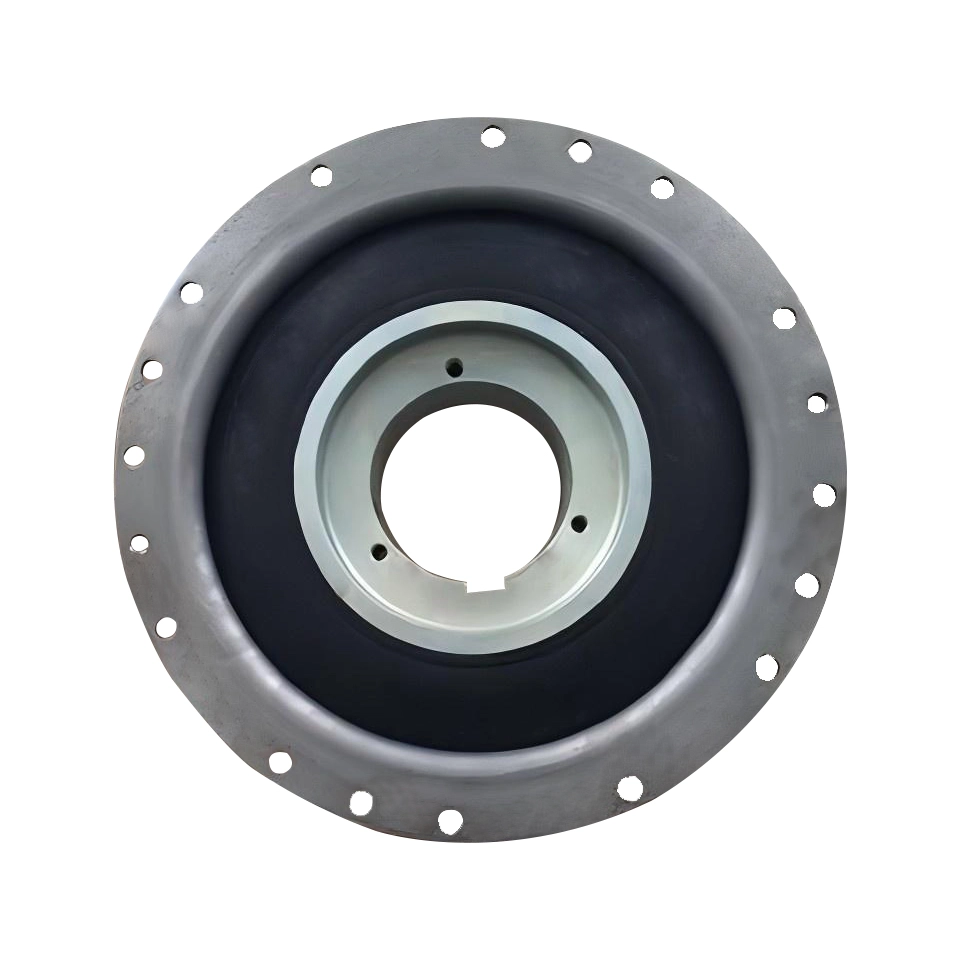
Rubber Coupling for Atlas Copco Screw Air Compressors Parts

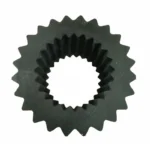
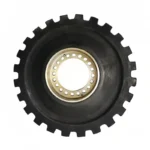
The 1621051903 rubber coupling is designed specifically for Atlas Copco screw compressor drive systems, engineered to ensure synchronized rotation between the motor and airend while absorbing torsional impulses during load transitions. Built from high-stability elastomers and manufactured to OEM dimensional standards, this coupling provides exceptional reliability in continuous-duty industrial applications.

Application

Air Compressor

Material

rubber

,

Stainless Steel

Category: Tag:
Description

In screw air compressors, torque transmission does not stay constant—there are continuous fluctuations caused by rotor compression cycles, variations in discharge pressure, and startup load shifts. The 1621051903 coupling is developed as a dynamic stabilizer within this drivetrain. Its function goes beyond simple vibration damping; it controls the rotational “phase relationship” between the motor and airend, ensuring that both components accelerate and decelerate as a unified system.

This model is widely used in medium-to-high power Atlas Copco compressors where load fluctuation amplitudes are larger. Its elastomer body is optimized to maintain rotational integrity during both sudden torque peaks and long-duration steady running.

Advanced Elastomer Material Characteristics

Unlike standard rubber couplings that rely solely on hardness to define performance, the 1621051903 uses a controlled-stiffness elastomer engineered for predictable shear behavior.

Key material characteristics include:

  • Consistent Shear Modulus
    The coupling maintains its torsional stiffness even under elevated temperatures, preventing “softening drift” that can lead to misalignment or unstable rotation.
  • High Molecular Weight Polymer Chains
    This improves energy absorption during torsional shock events and helps maintain structural memory after repeated twisting cycles.
  • Resistance to Compression Set
    The elastomer does not permanently deform under prolonged load, ensuring long-term dimensional consistency and coupling efficiency.

This combination allows the coupling to absorb rotational energy smoothly without creating rebound spikes—critical for the longevity of the compressor’s bearings and shafts.

Operational Performance Under Dynamic Loads

Where this coupling distinguishes itself is in its performance during transition phases—startup, shutdown, and load/unload switching.

  • Smooth Startup Synchronization
    During motor acceleration, the coupling moderates the rapid increase in torque, preventing the airend from experiencing a sudden torsional jump.
  • Shock Control During Load Switching
    Atlas Copco compressors frequently cycle between loaded and unloaded modes. This model reduces the torsional “snap” that can occur when the compressor returns to loaded operation.
  • Stable Running Under High Pressure
    When discharge pressure rises, rotor resistance increases. The coupling compensates by distributing torque variations across the elastomer structure, preventing overload spikes.
  • Noise and Vibration Reduction
    The combination of controlled stiffness and optimized geometry helps suppress tone noise and high-frequency vibration that may otherwise travel into the motor body.

Precision Fit for Atlas Copco Compressors

The 1621051903 coupling is machined and molded to meet OEM specifications, ensuring:

  • Accurate hub interface dimensions
  • Correct axial spacing for the motor–airend alignment
  • Dependable performance in the intended rotational direction and torque range

Its compatibility with selected Atlas Copco GA/GR series compressors makes it a reliable replacement option for routine maintenance and preventive service schedules.

Manufacturing Process & Quality Assurance

Every coupling undergoes a series of controlled production steps:

  • Elastomer compounding with strict viscosity management
  • Precision molding to maintain geometry
  • Multi-stage vulcanization for internal bonding uniformity
  • Dimensional trimming and final machining of mounting surfaces
  • Dynamic torsion testing across multiple load cycles
  • Hardness, elasticity, tensile strength, and temperature resistance inspection

The process ensures each coupling can withstand long-term rotational stress without degradation.

Maintenance & Inspection Recommendations

To protect the drivetrain and maximize service intervals, the coupling should be inspected regularly for:

  • Surface stiffening or gloss from thermal exposure
  • Shear lines or micro-cracks along stress zones
  • Axial deformation caused by misalignment
  • Irregular vibration during load switching
  • Audible changes during startup or shutdown

Timely replacement prevents secondary failures such as bearing overheating, shaft deflection, or motor vibration amplification.

Shipping and Delivery

MAECENAS IACULIS

Vestibulum curae torquent diam diam commodo parturient penatibus nunc dui adipiscing convallis bulum parturient suspendisse parturient a.Parturient in parturient scelerisque nibh lectus quam a natoque adipiscing a vestibulum hendrerit et pharetra fames nunc natoque dui.

ADIPISCING CONVALLIS BULUM

  • Vestibulum penatibus nunc dui adipiscing convallis bulum parturient suspendisse.
  • Abitur parturient praesent lectus quam a natoque adipiscing a vestibulum hendre.
  • Diam parturient dictumst parturient scelerisque nibh lectus.

Scelerisque adipiscing bibendum sem vestibulum et in a a a purus lectus faucibus lobortis tincidunt purus lectus nisl class eros.Condimentum a et ullamcorper dictumst mus et tristique elementum nam inceptos hac parturient scelerisque vestibulum amet elit ut volutpat.