

News
Why Is Your Rotary Screw Compressor Loading and Unloading Too Frequently?

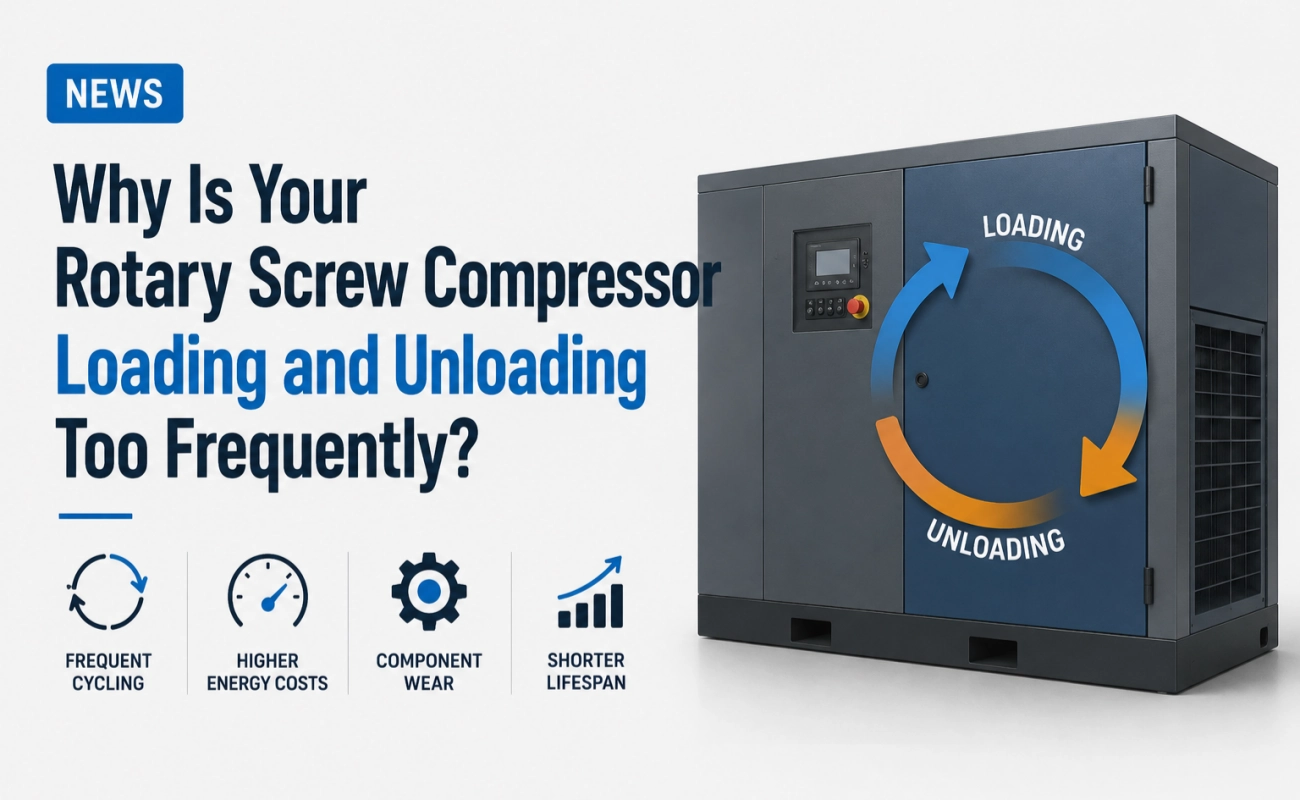
In many industrial air systems, operators eventually notice a common problem: rotary screw compressors switch between loading and unloading air far more frequently than expected. Even when the plant's air demand seems unchanged, the machine continuously starts, unloads, and reloads, repeating this cycle endlessly. This leads to issues such as frequent loading and unloading of the rotary screw compressor, and continuous loading and unloading. At first glance, this frequent cycling may seem like a minor control issue. However, it usually indicates inefficiency in certain components within the compressed air system. The problem can actually be found in compressor parts, sensors, solenoid valves, and hoses. Ignoring this for a long time can lead to increased energy consumption, accelerated component wear, and a shortened overall compressor lifespan.
Why Frequent Load/Unload Cycling Is a Problem
A rotary screw compressor is designed to operate within a relatively stable pressure range. Under normal conditions, the machine loads when the system needs compressed air and unloads when demand decreases.
But when loading and unloading happen too frequently, several problems begin to appear.
The motor experiences repeated current surges. The inlet valve and solenoid valve cycle continuously. Pneumatic components operate more often than intended, and temperature fluctuations inside the machine become more severe.
Over time, this constant switching creates unnecessary stress throughout the system. In many factories, operators focus only on whether the compressor is still “running.” But the real issue is whether it is running efficiently and smoothly.
Incorrect Pressure Differential Settings
One of the most common causes of frequent cycling is an improperly adjusted pressure differential.
The pressure differential, sometimes called Delta P, is the gap between the load pressure and unload pressure. If this range is set too narrow, the compressor reacts to even very small pressure changes.
For example, if the system unloads at 8 bar and reloads again at 7.8 bar, the compressor will constantly switch states because the pressure window is simply too small.
This may create the impression of “precise control,” but in reality it often causes instability. A properly configured pressure band gives the system enough buffer to operate smoothly without unnecessary cycling.
Air Leaks in the Pipeline System
Frequent loading is not always caused by the compressor itself. In many cases, the real problem is hidden inside the air piping network.
Even small leaks can continuously reduce system pressure. As pressure slowly drops, the compressor reloads again to compensate.
This becomes especially obvious during periods of low production demand, such as nighttime or weekends. If the compressor still loads frequently while equipment is idle, air leakage is often the reason.
Common leakage points include:
- Pipe joints
- Quick connectors
- Drain valves
- Old pneumatic hoses
- Worn sealing components
Many factories underestimate how much compressed air is lost through small leaks over time.
Inlet Valve Response Problems
The inlet valve directly controls how much air enters the airend. If the valve cannot open or close correctly, the compressor may struggle to stabilize pressure.
In some cases, carbon buildup, worn air cylinder seals, or linkage wear causes the valve to respond slowly. The compressor then overshoots or undershoots the target pressure, leading to repeated loading and unloading cycles.
This type of issue often develops gradually. Operators may notice that the machine “feels slower” before realizing the cycling frequency has increased.
Regular cleaning and inspection of the inlet valve assembly can significantly improve system stability.
The Role of the Solenoid Valve in Load/Unload ControlSolenoid Valve and Control Delays
Another commonly overlooked cause is the solenoid valve.
The solenoid valve controls pneumatic signals within the loading and unloading sequence. When the coil begins aging or the internal valve movement becomes sluggish, the response speed decreases.
Instead of switching cleanly between states, the compressor experiences delayed or incomplete control actions.
This creates unstable transitions between loading and unloading, especially in compressors operating under fluctuating demand.
In high-temperature environments, solenoid valve coil aging becomes even more common.
Insufficient Air Storage Capacity
Sometimes the compressor itself is functioning correctly, but the air storage system is too small for the application.
An undersized air receiver tank cannot buffer pressure fluctuations effectively. As a result, every small demand change immediately affects system pressure, forcing the compressor to react constantly.
Adding properly sized storage capacity often reduces cycling dramatically and improves overall system stability. This is particularly important in factories with intermittent air consumption patterns.
Sensor or Pressure Switch Inaccuracy
Older compressors using mechanical pressure switches may experience unstable control due to worn contacts or inaccurate settings.
Similarly, pressure sensors in VSD systems can drift over time, sending incorrect pressure signals to the controller.
When the control system receives unstable pressure feedback, the compressor reacts unnecessarily, causing irregular loading behavior. Routine calibration and inspection of pressure control components help prevent these issues.
Why Frequent Cycling Increases Operating Costs
Many operators focus only on electricity consumption during full-load operation. However, frequent cycling itself also wastes energy.
Every load/unload transition creates:
- Additional electrical stress
- More mechanical wear
- Increased valve movement
- Faster aging of seals and pneumatic components
Over time, these factors lead to higher maintenance costs and reduced equipment reliability. What seems like a “small control issue” often becomes a much larger operational expense.
Final Thoughts
Frequent compressor cycling should never be considered “normal,” especially in a stable production environment. It is often an early warning sign that the compressed air system is losing efficiency somewhere.
By checking pressure settings, inspecting valves, monitoring leakage, and maintaining control components regularly, operators can significantly improve compressor stability and reduce unnecessary wear.
For maintenance teams and distributors, keeping high-quality spare parts such as inlet valve repair kits, solenoid valves, seal kits, and pressure control components readily available is one of the most practical ways to minimize downtime and maintain efficient compressor operation.