News
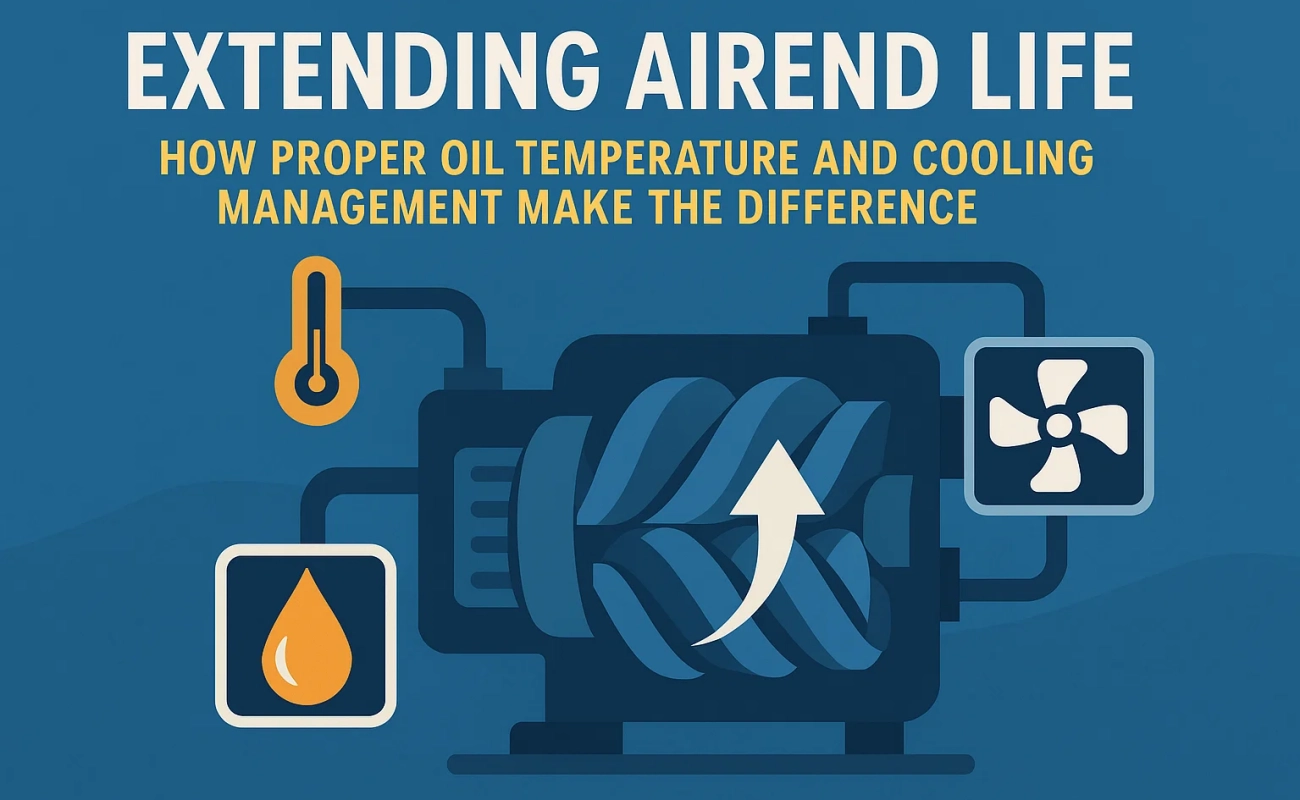
Extending Airend Life: How Proper Oil Temperature and Cooling Management Make the Difference
When a rotary screw air compressor begins to show performance decline, excessive noise, or rising energy consumption, most operators instinctively check the filtration system or the drive motor. But in reality, one of the most decisive factors affecting long-term reliability is far more subtle: how well the compressor manages oil temperature and cooling efficiency.
The airend—often called the “heart” of the machine—depends on stable lubrication and controlled heat conditions. When either element drifts outside its ideal operating range, wear accelerates, bearings become overloaded, and rotor surfaces lose their protective oil film. Understanding the relationship between temperature, oil properties, and cooling performance is essential for anyone responsible for maintaining industrial air compressors.
Why Oil Temperature Directly Determines Airend Longevity
Screw compressor oil is more than a lubricant; it performs sealing, cooling, and contamination suspension simultaneously. All these functions depend on one condition: temperature stability.
1. The Ideal Temperature Window
Most rotary screw compressors operate best when oil temperatures remain between 75°C and 88°C. Within this range:
- The oil maintains proper viscosity
- The sealing between male and female rotors remains effective
- Moisture and condensate evaporate efficiently
- Bearings receive consistent lubrication film thickness
When temperatures fall too low, moisture accumulates. When temperatures rise too high, oxidation accelerates. Either scenario shortens airend service life.
2. What Happens When Temperatures Run Too High
High oil temperature is one of the most dangerous conditions for an airend. As heat increases:
- Oil viscosity drops, reducing lubrication
- Bearings operate with increased friction
- Rotor surfaces lose oil film protection
- Oil carbonizes inside the airend housing
- Oxidation shortens oil life dramatically
Once varnish begins forming on rotors or bearings, no amount of oil changes can reverse the damage. The airend gradually loses efficiency and eventually requires overhaul.
The Role of the Cooling System in Protecting the Airend
A compressor’s cooling system is often overlooked until problems appear. Yet its performance directly controls oil temperature—and by extension, the lifespan of every internal component.
1. Oil Cooler Efficiency and Airflow
The oil cooler is responsible for removing excess heat from the lubrication loop. Several factors impact its performance:
- Dust buildup on cooler fins
- Insufficient ventilation inside the compressor room
- High ambient temperatures
- Fan motor or fan blade wear
- Cooler passage clogging caused by degraded oil
A 10% reduction in cooler efficiency can push oil temperatures past the safe limit during heavy load operation.
2. Thermostatic Valve (Temperature Control Valve) Function
The thermostatic valve ensures that oil flows through the cooler only when needed. If it malfunctions:
- It may bypass the cooler entirely, causing rapid overheating
- It may stick partially open, making warm-up cycles too slow
- It may restrict flow, starving the airend of cooled oil
Regular inspection of the thermostatic element is critical, especially for machines running in hot industrial environments.
3. Ambient Temperature and Ventilation
Many operators underestimate the impact of machine room layout. Compressors installed in confined, dusty, or poorly ventilated areas operate 5–12°C hotter on average. This alone can reduce airend lifespan by 30%.
Simple improvements—ducting hot air exhaust, increasing fresh air intake, or installing temperature-controlled ventilation—can significantly reduce thermal stress.
Oil Quality and Change Intervals: The Other Half of Temperature Management
Even the best cooling system cannot compensate for degraded or incorrect oil. High-performance synthetic oils maintain viscosity better at elevated temperatures, resist oxidation, and reduce carbon formation inside the airend.
Signs It’s Time to Replace Compressor Oil
- Darkened, burnt smell
- Premature temperature rise during operation
- Increased bearing noise
- Pressure drop across oil circuits
- Visible varnish or sludge during inspection
Changing oil too late is a leading contributor to early airend bearing failure.
Practical Steps to Extend Airend Life Through Temperature Control
Operators can significantly extend airend service life by following a disciplined maintenance plan:
- Keep oil temperatures within the recommended operating range
- Clean the oil cooler regularly and ensure unobstructed airflow
- Inspect and test the thermostatic valve during every service interval
- Choose a high-quality synthetic oil matched to the compressor’s duty cycle
- Optimize compressor room ventilation and monitor ambient temperature
- Track temperature trends—sudden changes often signal early mechanical issues
A well-maintained cooling system can easily add 2,000 to 5,000 hours of additional airend life.
Conclusion
Protecting the airend isn’t only about lubrication—it’s about controlling the entire thermal environment the compressor operates in. Stable oil temperature, clean cooling pathways, and proper airflow create the conditions that allow bearings, rotors, and seals to function as designed.
For companies aiming to reduce downtime and extend compressor lifespan, focusing on temperature and cooling efficiency is one of the most cost-effective strategies available. Proper management of these factors ensures the airend remains reliable, efficient, and ready for long-term operation.