News
No More Overheating: 5 Hidden Culprits Behind Compressor High-Temperature Shutdowns
High-temperature shutdown is one of the most frustrating problems air compressor operators face, especially during summer or under continuous high-load operation. Unlike sudden mechanical failures, overheating usually builds up quietly. By the time the compressor trips on temperature protection, internal components may have already suffered accelerated wear.
What makes overheating particularly dangerous is that the root cause is often not obvious. Many compressors show normal pressure and flow, yet temperature keeps creeping upward. In most cases, the problem is not the airend itself, but a breakdown somewhere in the temperature control or cooling chain.
Below are five commonly overlooked culprits behind compressor overheating—and how to identify them before they bring your system to a halt.
Thermostatic Valve Failure: The Most Common but Least Suspected Cause
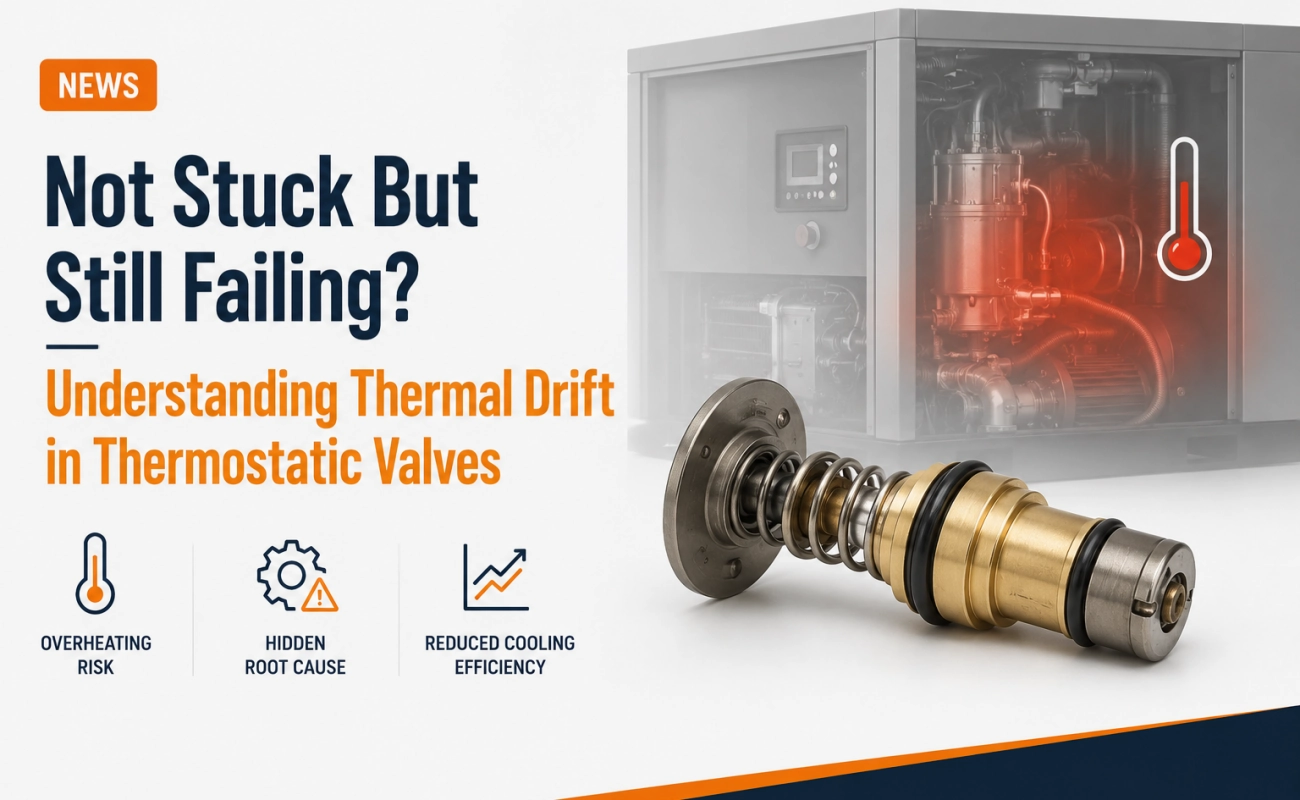
The thermostatic valve plays a critical role in regulating oil temperature. Its job is to control how much oil flows through the oil cooler versus bypassing it, ensuring the oil reaches and maintains its optimal operating temperature—typically between 80°C and 95°C for rotary screw compressors.
When the thermostatic valve fails, it usually fails in one of two ways:
- Stuck partially or fully closed, restricting oil flow to the cooler
- Sluggish response, unable to adjust quickly as load or ambient temperature changes
In hot weather or high-load conditions, a malfunctioning thermostatic valve prevents sufficient heat dissipation. Oil temperature rises rapidly, leading to high discharge temperatures and eventual shutdown.
Warning signs include:
- Oil temperature rising faster than normal after startup
- Stable pressure but repeated high-temp alarms
- Oil cooler that remains relatively cool to the touch despite high oil temperature
Replacing or servicing the thermostatic valve is often a low-cost fix compared to the damage caused by prolonged overheating.
Oil Cooler Blockage: Silent Heat Accumulation
Oil coolers are highly efficient—but only when airflow and oil passages are clean. Over time, dust, oil mist, and airborne contaminants accumulate on cooling fins, especially in dusty workshops or textile, woodworking, and cement plants.
Internal blockage can be even more dangerous. Degraded oil, sludge, or carbon deposits reduce heat transfer efficiency inside the cooler, gradually raising oil temperature even when external airflow appears normal.
Common indicators include:
- Gradual temperature increase over weeks or months
- Cooling fan running continuously with little effect
- Temperature improves briefly after cleaning, then worsens again
Regular external cleaning is important, but periodic internal inspection or flushing is equally critical—especially for compressors running long oil change intervals.
Cooling Fan or Fan Motor Failure: Reduced Airflow, Maximum Risk
Cooling fans are often taken for granted until they fail. A fan motor that runs at reduced speed, draws excessive current, or intermittently stops can severely compromise cooling capacity.
In some cases, the fan appears operational, but airflow direction is incorrect due to wiring issues or improper replacement. In others, worn bearings or electrical faults prevent the fan from reaching its designed speed.
Typical symptoms include:
- Overheating mainly during peak daytime temperatures
- Normal temperature at night or under light load
- Unusual fan noise, vibration, or delayed startup
Because airflow loss directly affects both oil cooler and aftercooler performance, fan-related issues often lead to rapid temperature spikes under load.
Poor Oil Quality or Incorrect Viscosity
Lubricating oil is not just for lubrication—it is also a major heat transfer medium inside the compressor. Using oil with degraded additives, oxidation byproducts, or incorrect viscosity reduces its ability to absorb and release heat.
Low-quality or incompatible oil may also accelerate carbon formation inside oil passages and coolers, compounding overheating problems over time.
Red flags include:
- Darkened oil color or burnt odor
- Shortened oil life
- Rising temperature despite normal cooling system operation
Always match oil specifications to the compressor manufacturer’s requirements and operating conditions, especially in high ambient temperature environments.
Restricted Airflow Around the Compressor Room
Sometimes the issue lies outside the compressor itself. Poor ventilation, blocked exhaust ducts, or recirculation of hot air inside the compressor room can dramatically reduce cooling efficiency.
As ambient intake temperature rises, the compressor has less temperature margin before reaching shutdown thresholds—even if all components are functioning properly.
Check for:
- Hot air being drawn back into the cooling intake
- Insufficient fresh air openings
- Compressor room temperatures exceeding design limits
Improving room ventilation is often one of the most cost-effective ways to reduce high-temperature shutdowns.
Final Thoughts: Overheating Is a System Problem, Not a Single Fault
High-temperature shutdowns are rarely caused by one catastrophic failure. More often, they result from small inefficiencies accumulating across the cooling and temperature control system—especially thermostatic valves, oil coolers, and fans.
For factories operating in summer conditions or under sustained high load, proactive inspection of these components can prevent downtime, extend airend life, and stabilize overall compressor performance.
Understanding where heat is generated—and more importantly, where it should be removed—is the key to keeping your compressor running cool, efficient, and reliable.