Product Applications

Inlet Valve Troubleshooting Guide: Air Compressor Pressure & Unloading Problems

Inlet Valve Troubleshooting Guide

In a rotary screw air compressor, the inlet valve plays a far more critical role than many operators realize. It is not just an air on–off device—it directly controls airflow, load regulation, pressure stability, and unloading behavior. When the inlet valve begins to malfunction, the symptoms often appear elsewhere in the system, leading to misdiagnosis and unnecessary part replacements.

Two of the most common and costly problems linked to inlet valve failure are pressure instability and incomplete unloading. Left unresolved, these issues can increase energy consumption, accelerate airend wear, and shorten the service life of bearings and rotors. This guide walks through how the inlet valve works, the typical failure modes, and how to systematically troubleshoot and fix these problems.

Understanding the Role of the Inlet Valve

The inlet valve controls how much air enters the airend based on system demand. During loaded operation, it modulates airflow to maintain the target pressure range. During unloading, it should close rapidly and completely, cutting off intake air and allowing internal pressure to drop.

In most oil-injected rotary screw compressors, the inlet valve works in coordination with:

  • The pressure regulator or control line
  • The solenoid valve
  • The minimum pressure valve
  • The control system logic

When any part of this chain is disrupted, the inlet valve may fail to respond correctly.

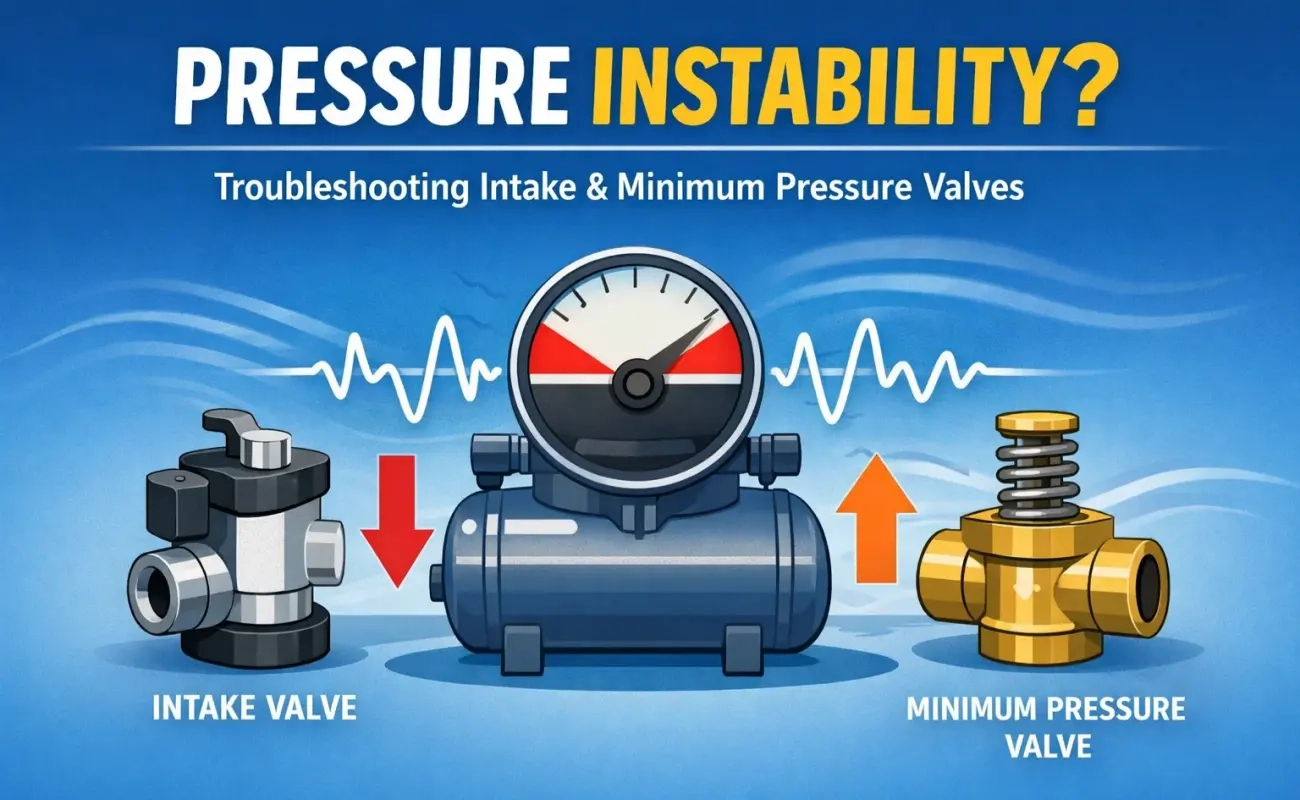
Symptom 1: Pressure Instability During Operation

Pressure fluctuation—where system pressure rises and falls rapidly within a short range—is often the first visible sign of inlet valve trouble.

Common Causes

  1. Sticking or sluggish valve movement
    Oil contamination, varnish buildup, or fine dust can cause the inlet valve piston or butterfly plate to move unevenly. Instead of smooth modulation, the valve opens and closes in jerks, leading to unstable pressure.
  2. Control air leakage
    Cracked pneumatic lines, loose fittings, or worn diaphragms reduce control pressure accuracy. The inlet valve receives inconsistent signals, causing delayed or incorrect positioning.
  3. Weak or damaged springs
    In mechanically assisted inlet valves, fatigued springs can no longer balance control pressure properly, resulting in overcorrection or oscillation.

Practical Checks

  • Observe inlet valve movement during load changes
  • Inspect control air lines for leaks or oil pooling
  • Check for delayed response when switching from unload to load

Symptom 2: Incomplete Unloading

Incomplete unloading occurs when the compressor continues to draw air even after entering unload mode. This is a serious issue that often goes unnoticed until energy bills rise or oil carryover increases.

Common Causes

  • Valve not fully closing
    Carbon deposits or worn sealing surfaces prevent the inlet valve from sealing tightly. Even a small opening allows air to enter the airend, keeping internal pressure artificially high.
  • Faulty solenoid valve
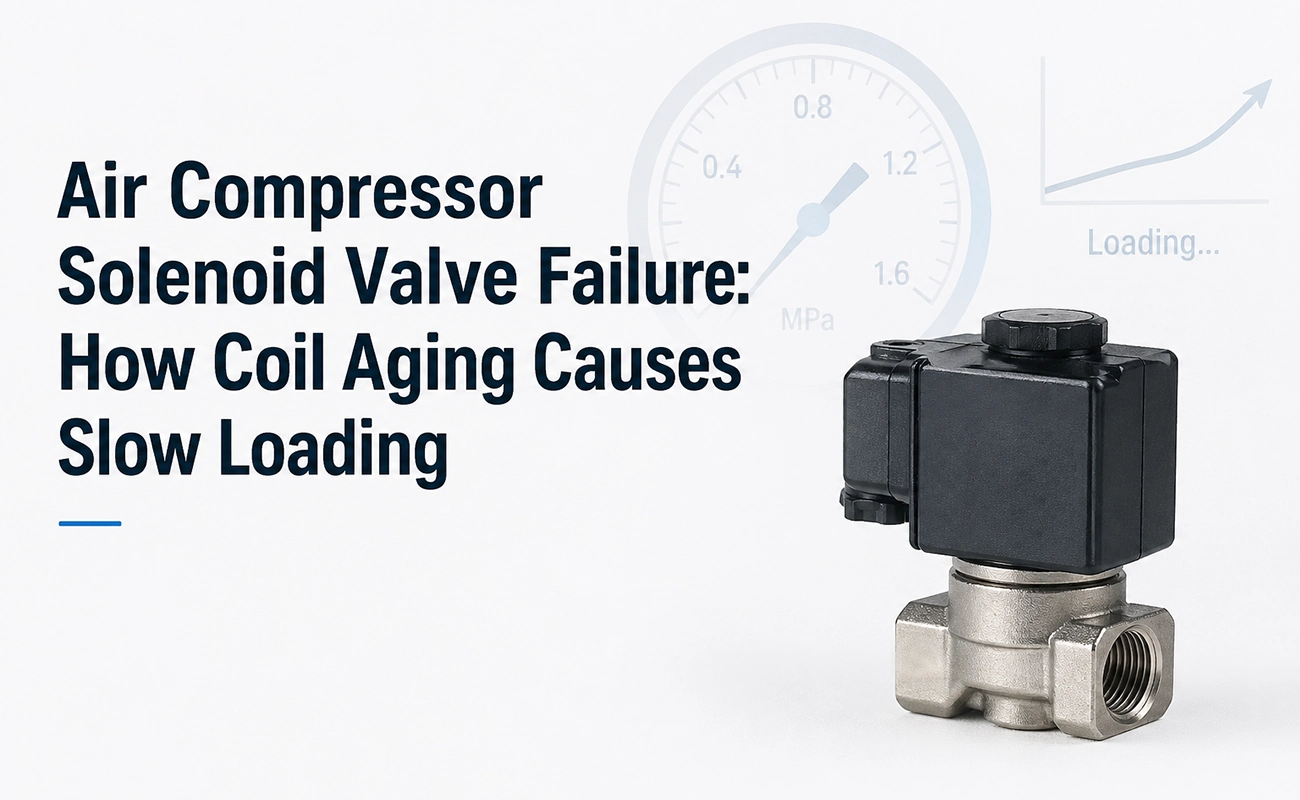
    If the solenoid fails to vent control air properly, the inlet valve remains partially open. Electrical faults, coil burnout, or internal contamination are typical culprits.
  • Incorrect control pressure settings
    Improper pressure regulator adjustment can prevent the inlet valve from reaching its full closed position during unloading.

Why Incomplete Unloading Is Dangerous

Incomplete unloading is not just an efficiency problem. It has long-term mechanical consequences:

  • Higher internal pressure during idle periods
  • Increased oil circulation and separator loading
  • Elevated bearing and rotor temperatures
  • Accelerated oil degradation

Over time, these effects significantly shorten airend life.

Step-by-Step Troubleshooting Approach

To avoid guesswork, troubleshooting should follow a logical sequence:

Step 1: Visual and functional inspection
Check for external oil leaks, damaged hoses, and obvious mechanical wear. Manually test valve movement if possible.

Step 2: Control system verification
Confirm solenoid valve operation and electrical signals during load/unload transitions. Ensure correct timing and voltage.

Step 3: Pneumatic integrity test
Inspect all control air lines, fittings, and diaphragms for leaks or blockage.

Step 4: Valve disassembly and cleaning
If issues persist, remove the inlet valve for internal inspection. Clean deposits, check seals, and measure wear against manufacturer tolerances.

Preventive Maintenance Best Practices

Many inlet valve failures are preventable with routine care:

  • Maintain proper oil quality and change intervals
  • Regularly drain condensate from control lines
  • Inspect inlet valve operation during scheduled services
  • Replace seals and springs proactively in high-duty applications

Clean oil and stable control air pressure are the two most important factors in extending inlet valve life.

Final Thoughts

Pressure instability and incomplete unloading are not isolated problems—they are early warning signs that the inlet valve is no longer doing its job correctly. Addressing these issues early helps protect the airend, reduce energy waste, and maintain reliable compressor performance.

By understanding how the inlet valve interacts with the rest of the system and following a structured troubleshooting process, operators and maintenance teams can resolve problems efficiently and avoid costly downtime.