Maintenance Tips

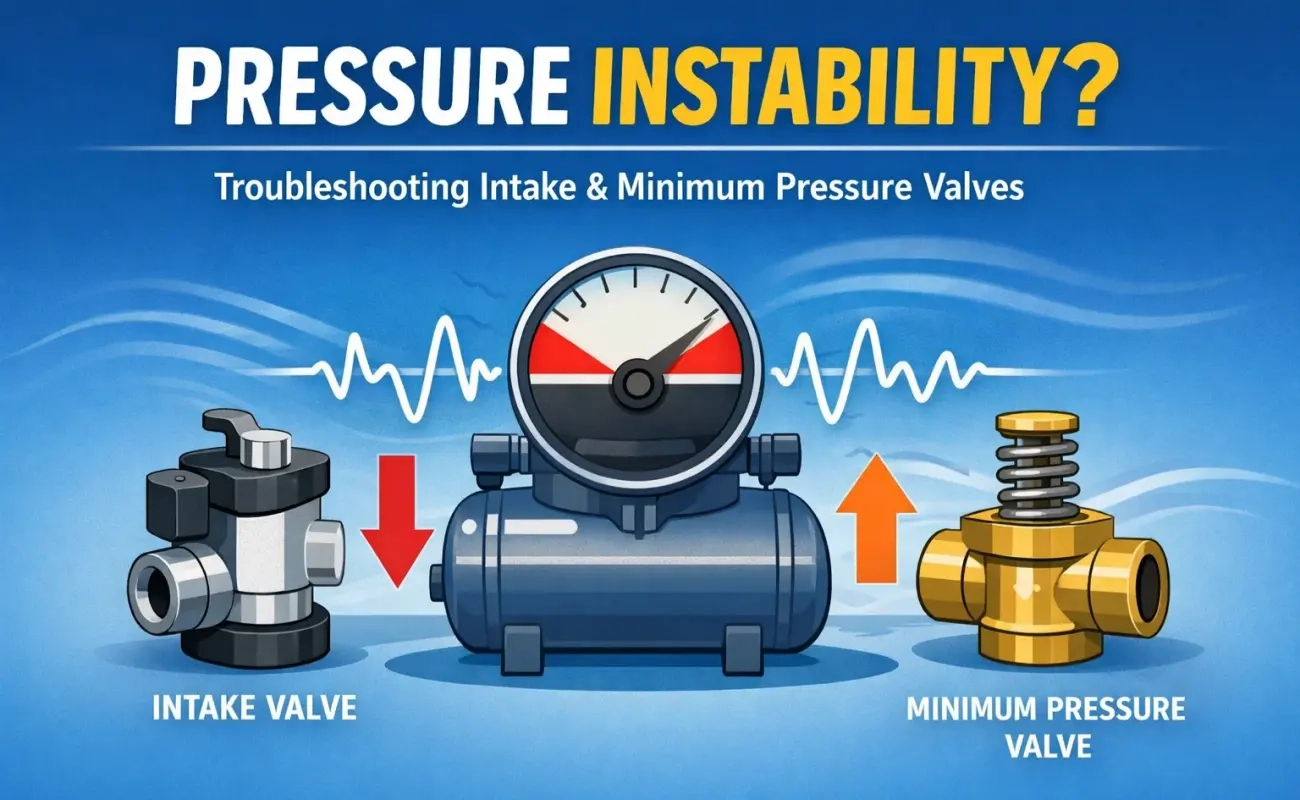
Pressure Instability? Troubleshooting Intake and Minimum Pressure Valves

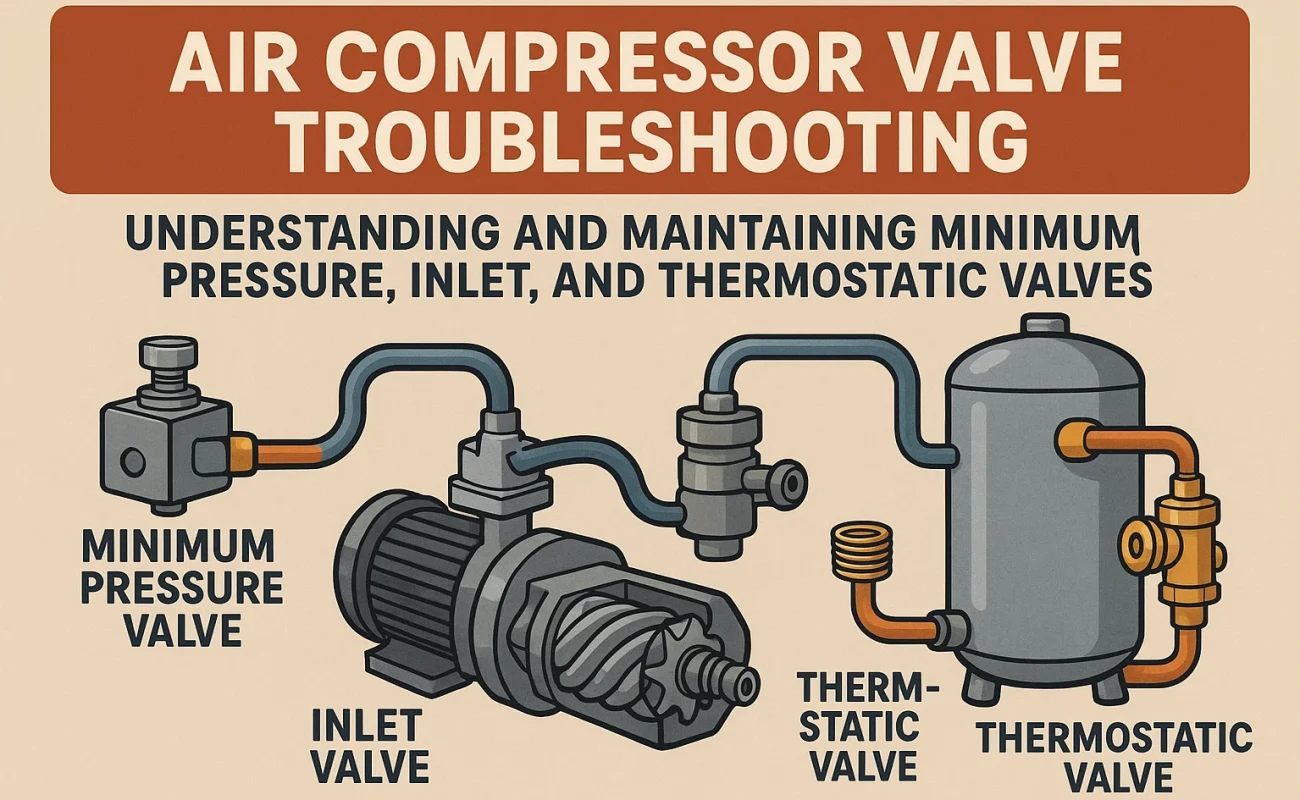
Intake And Minimum Pressure Valves

When air compressor pressure becomes unstable, operators often suspect the airend, sensors, or control system. In reality, two small but highly critical components are responsible for most pressure fluctuation and unloading failures: the intake valve and the minimum pressure valve (MPV).

These two valves control how air enters and exits the compression system. When either of them fails to operate precisely, pressure becomes unpredictable, unloading stops working correctly, and the compressor starts wasting energy while placing unnecessary stress on internal components.

Understanding how these valves work—and how they fail—is essential for maintaining stable production.

Why Intake and Minimum Pressure Valves Control System Stability

A rotary screw compressor does not simply produce compressed air and send it out. Pressure inside the system is the result of a carefully balanced process.

The intake valve regulates how much air enters the airend.
The minimum pressure valve maintains a fixed minimum internal pressure before allowing air to flow to the plant.

Together, they ensure:

  • Stable compression
  • Proper oil circulation
  • Smooth loading and unloading
  • Consistent downstream pressure
  • When either valve loses accuracy, the balance collapses.

How Intake Valve Failure Causes Pressure Instability

The intake valve is designed to open and close smoothly in response to system demand. During unloading, it must close fully, stopping air from entering the airend.

When the Intake Valve Cannot Close

If the intake valve sticks partially open due to contamination, worn seals, or weak springs, the compressor continues to draw in air even in unload mode. This leads to:

  • Internal pressure staying high
  • Oil separation becoming less effective
  • Compressor failing to fully unload
  • Pressure oscillation between load and unload cycles

The machine appears to be running, but it is never truly idle.

Why This Is Dangerous

When air keeps entering the airend during unload, rotors keep compressing, oil keeps circulating, and heat continues to build. The result is:

  • Higher power consumption
  • Increased oil carryover
  • Accelerated bearing and rotor wear
  • Unstable pressure at the outlet

What looks like a minor valve problem quickly becomes a system-wide efficiency issue.

Minimum Pressure Valve: The Hidden Stabilizer

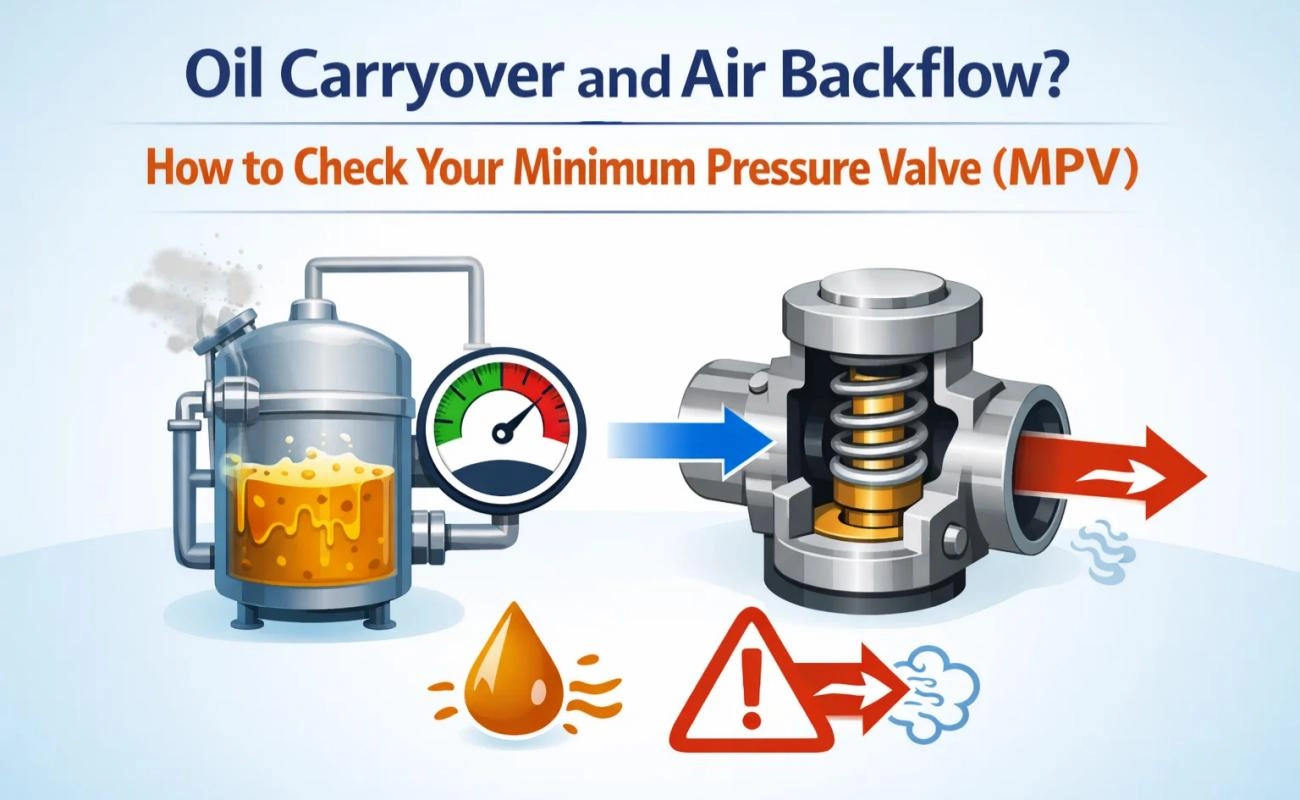
The MPV sits at the discharge of the oil separator tank. Its job is to maintain a minimum internal pressure—usually between 4 and 5 bar—before allowing compressed air to enter the downstream system.

This minimum pressure is critical because:

  • It forces oil to separate properly from compressed air
  • It ensures stable oil circulation through the airend
  • It prevents backflow during unloading

What Happens When the MPV Spring Weakens

Inside every MPV is a calibrated spring that determines opening pressure. Over time, heat and mechanical cycling cause that spring to fatigue. When it weakens, the valve opens too early.

This causes:

  • Low internal separator pressure
  • Poor oil separation
  • Fluctuating outlet pressure
  • Unstable compressor loading behavior

In severe cases, the system experiences pressure drop even though the compressor appears to be running normally.

Why Intake and MPV Problems Often Appear Together

In many compressors, intake valve issues and MPV fatigue reinforce each other.

A leaking intake valve raises internal pressure when the compressor should be unloaded. A weak MPV releases that pressure too quickly. The result is a constant cycle of over-compression and sudden pressure loss.

This instability forces the control system to repeatedly load and unload the compressor, increasing wear on:

  • Bearings
  • Seals
  • Motor
  • Drive system

The longer this continues, the more expensive the repair becomes.

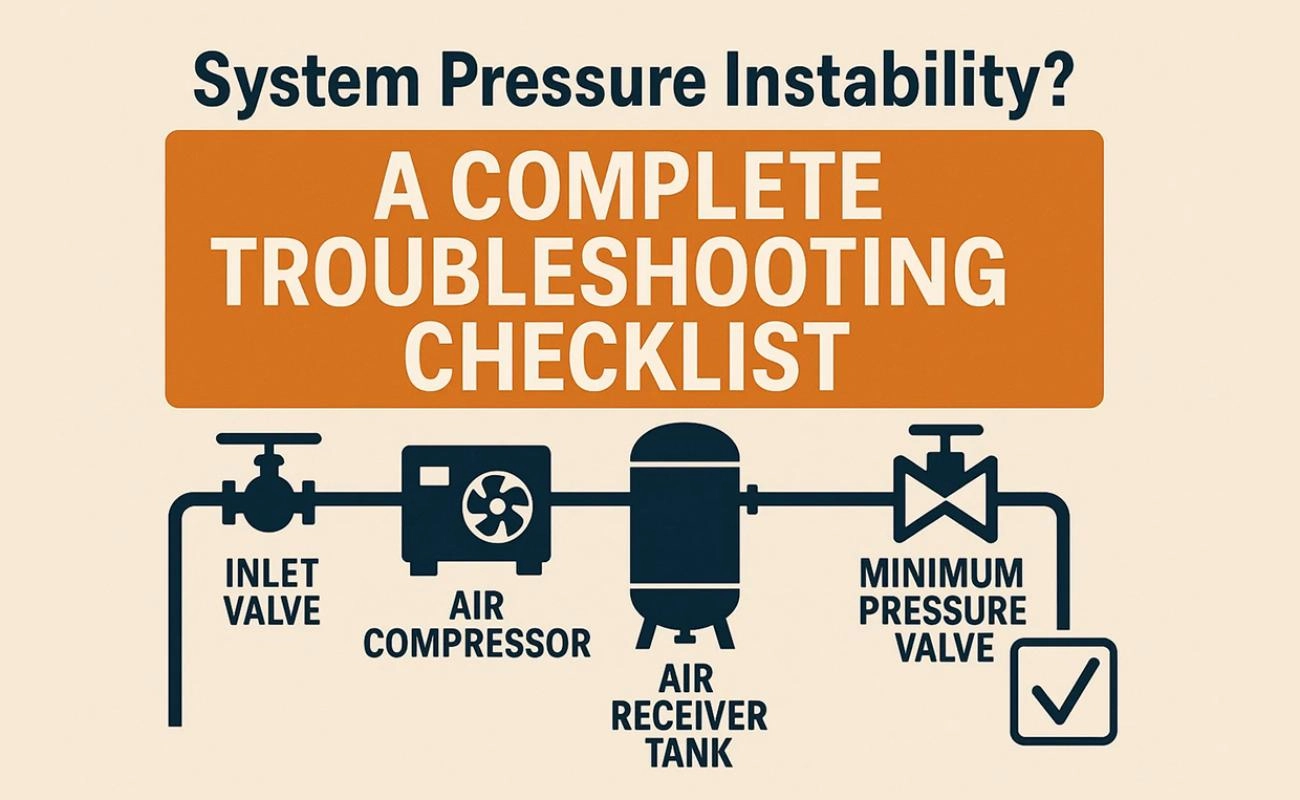
How to Diagnose These Valve Problems

A few practical checks can reveal most valve-related issues.

For the intake valve:

  • Monitor whether inlet air stops during unload
  • Listen for airflow at the intake during idle
  • Check for oil contamination in the control air line

For the MPV:

  • Measure separator tank pressure vs outlet pressure
  • Look for low internal pressure with normal downstream pressure
  • Inspect oil carryover and separator performance

These tests require no special tools, just attention to system behavior.

Why Precision Valves Protect Production

Modern rotary screw compressors rely on extremely tight tolerances. The intake valve and MPV are not simple on-off devices—they are precision flow control components.

When they work correctly:

  • Pressure remains stable
  • Energy consumption stays low
  • Oil separation remains efficient
  • Airend life is extended

When they fail, production becomes unpredictable, and operating costs quietly increase.

Conclusion

Pressure instability and unloading problems are rarely caused by the airend itself. In most cases, the real cause lies in worn, contaminated, or fatigued valves—especially the intake valve and the minimum pressure valve.

Keeping these components in good condition is one of the most cost-effective ways to protect your compressor, maintain stable pressure, and ensure uninterrupted production.

Small valves, when precise, make a big difference.