News
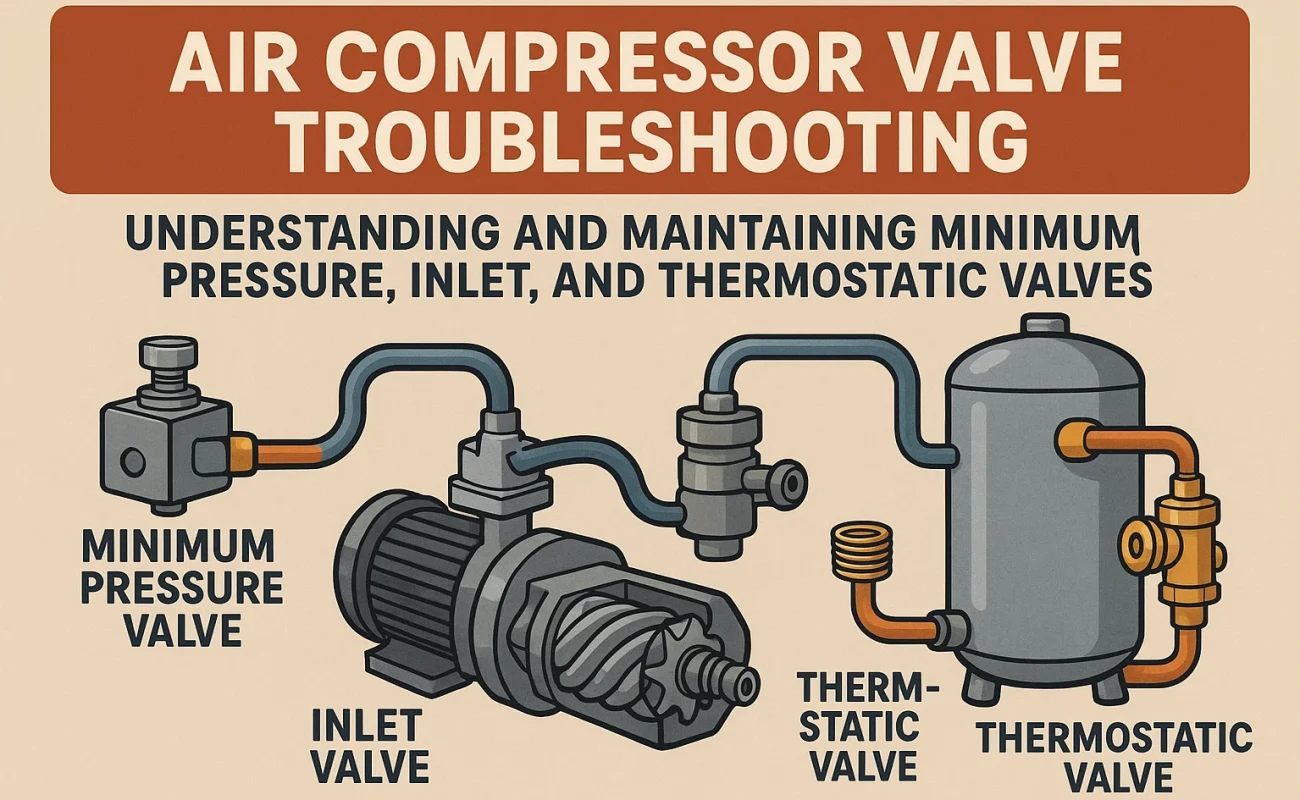
Air Compressor Valve Troubleshooting: Minimum Pressure, Inlet, and Thermostatic Valves
In a screw air compressor, valves play a critical role in regulating pressure, temperature, and airflow throughout the system. While the motor, airend, and filters often receive the most attention, valves quietly ensure stability and efficiency behind the scenes.
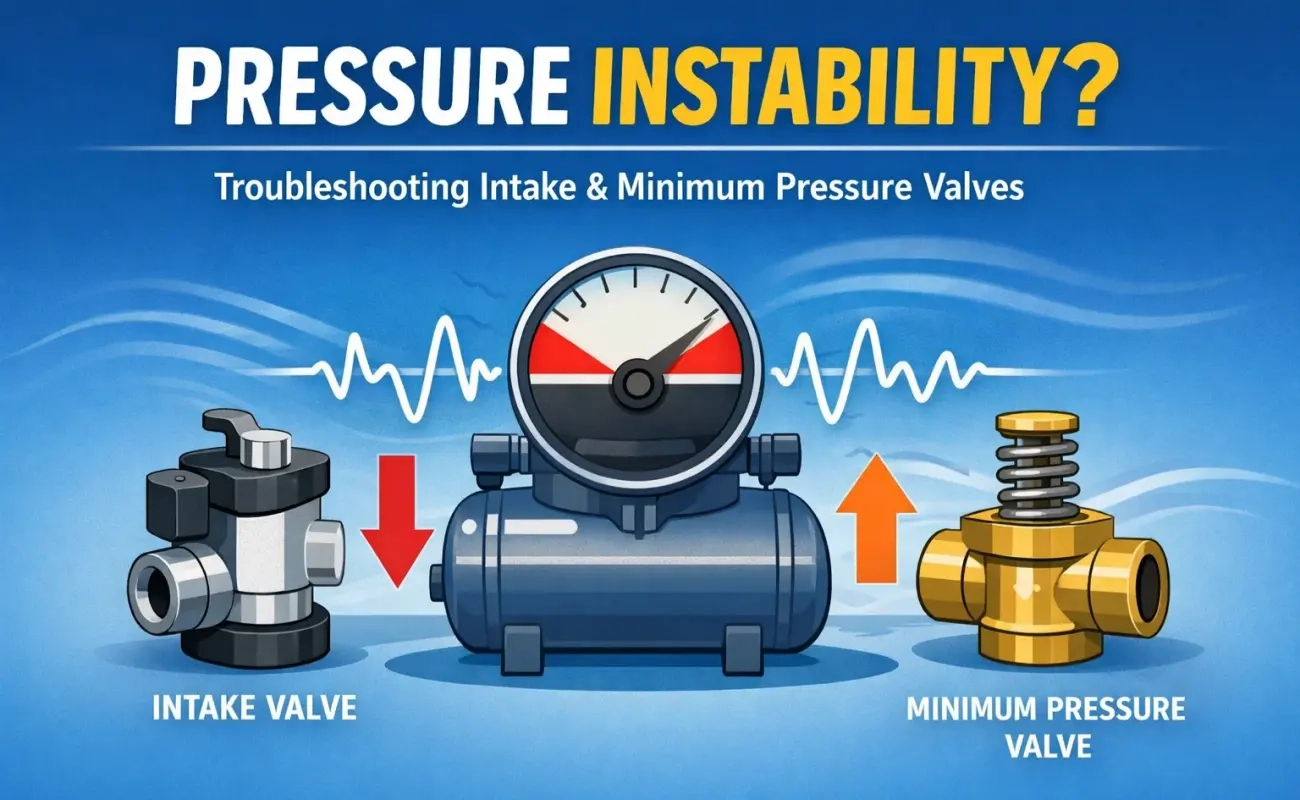
Three of the most important valves — the minimum pressure valve (MPV), inlet valve, and thermostatic valve — are also among the most common sources of performance issues. Understanding how they work and how to diagnose their faults can save operators from unplanned downtime and expensive repairs.
Minimum Pressure Valve (MPV)
Function:
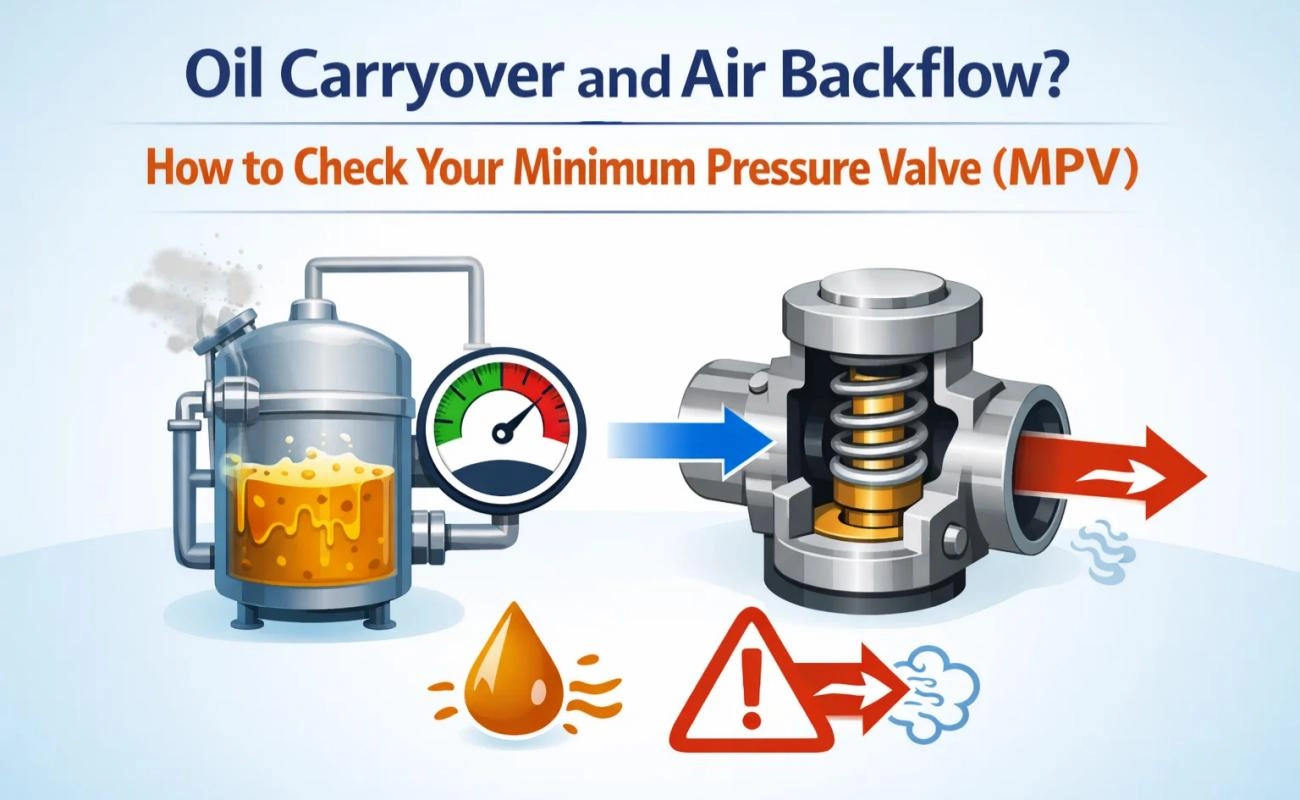
The minimum pressure valve, typically installed at the compressor outlet, keeps the internal system pressure above a preset level (usually around 4–5 bar) before air enters the downstream piping. This ensures proper lubrication and protects the oil separator from backflow when the machine starts or stops.
Common Problems:
- Valve Stuck or Slow to Open: Usually caused by carbon deposits or oil sludge buildup. This results in insufficient air discharge or excessive pressure inside the separator tank.
- Air Leakage When Stopped: The valve seat or sealing ring may be worn, allowing air to escape back through the outlet.
- Vibration or Noise: Weak spring tension or debris interference can cause the valve disc to oscillate.
Maintenance Tips:
Regularly clean the MPV and check the sealing surface. During overhauls, inspect the spring elasticity and replace O-rings if hardened. If the compressor shows slow pressure buildup or pressure fluctuations at startup, the MPV is the first component to check.
Inlet Valve: Controlling Air Intake
Function:
The inlet valve manages the amount of air entering the airend and thus controls compressor output. In a load/unload system, it opens fully under load and closes when the machine idles. In variable-speed compressors, it continuously adjusts the intake volume according to demand.
Common Problems:
- Valve Does Not Fully Close: Caused by contamination or a faulty solenoid control signal. Leads to continuous air intake even when the compressor is unloaded, wasting energy.
- Slow Opening Response: The actuator or piston may be contaminated with carbonized oil, causing delayed air supply at startup.
- Air Leakage at the Valve Seat: Damaged seals or uneven seating surfaces allow compressed air to leak back through the intake.
Maintenance Tips:
Clean and inspect the valve body regularly, especially in dusty or oily environments. Check solenoid valves and pilot air lines for proper signal transmission. During reassembly, ensure the actuator moves freely and the seals fit tightly. Using high-quality lubricants can also reduce carbon buildup on moving parts.
Thermostatic Valve: Regulating Oil Temperature
Function:
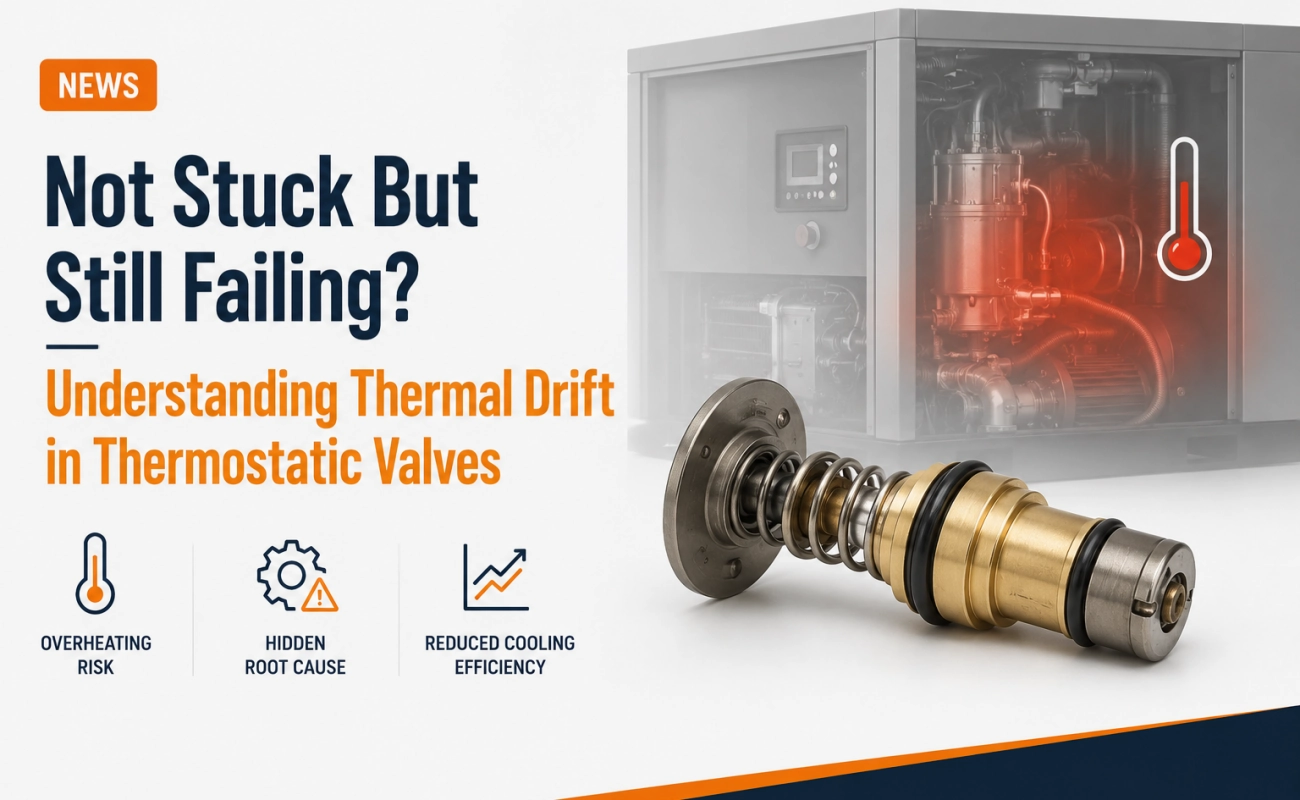
The thermostatic valve, often installed in the oil circuit, controls the oil flow path between the cooler and the compressor to maintain the optimal operating temperature — typically around 75–85°C. When the oil is cold, the valve bypasses the cooler to help the system reach temperature quickly; when hot, it directs oil through the cooler to prevent overheating.
Common Problems:
- Valve Stuck Closed: Oil cannot circulate through the cooler, causing rapid temperature rise and triggering high-temperature shutdown.
- Valve Stuck Open: The compressor struggles to reach working temperature, resulting in excessive moisture and oil emulsification.
- Thermostatic Element Failure: Aging or damaged wax elements lose sensitivity, making the valve slow to respond to temperature changes.
Maintenance Tips:
Inspect oil cleanliness regularly and replace the thermostatic valve element every 1–2 years. Use genuine or high-quality replacement valves to ensure accurate temperature control. If oil temperature readings fluctuate abnormally, check the valve first before suspecting the cooler or temperature sensor.
Preventive Maintenance and Troubleshooting Strategy
For all three valves, clean oil, proper filtration, and regular inspection are the keys to preventing malfunction. Here are some general recommendations:
- Replace the air, oil, and separator filters on schedule to minimize carbon buildup in valves.
- Monitor operating pressure, temperature, and load/unload cycles; sudden deviations often indicate valve-related issues.
- Keep maintenance records — recurring problems at specific intervals often point to oil quality or filter compatibility issues.
- During annual overhauls, dismantle and clean each valve assembly, replacing gaskets, O-rings, and worn mechanical parts as needed.
Conclusion
While air compressor valves are relatively small components, their reliability directly affects the system’s efficiency and lifespan. A stuck minimum pressure valve can cause startup pressure issues; a leaking inlet valve wastes energy; and a faulty thermostatic valve can lead to oil degradation or shutdowns.
By understanding how these valves function and performing preventive maintenance, operators can ensure smoother performance, lower energy costs, and longer compressor life.
If you need replacement valves compatible with major screw compressor brands such as Ingersoll Rand, Sullair, Atlas Copco, and Kaeser, our high-quality minimum pressure valves, inlet valves, and thermostatic valves are engineered for precise operation and long service life. Contact us today for OEM cross-reference or technical support.