News
Why the Minimum Pressure Valve Is Critical to Preventing Oil Carryover
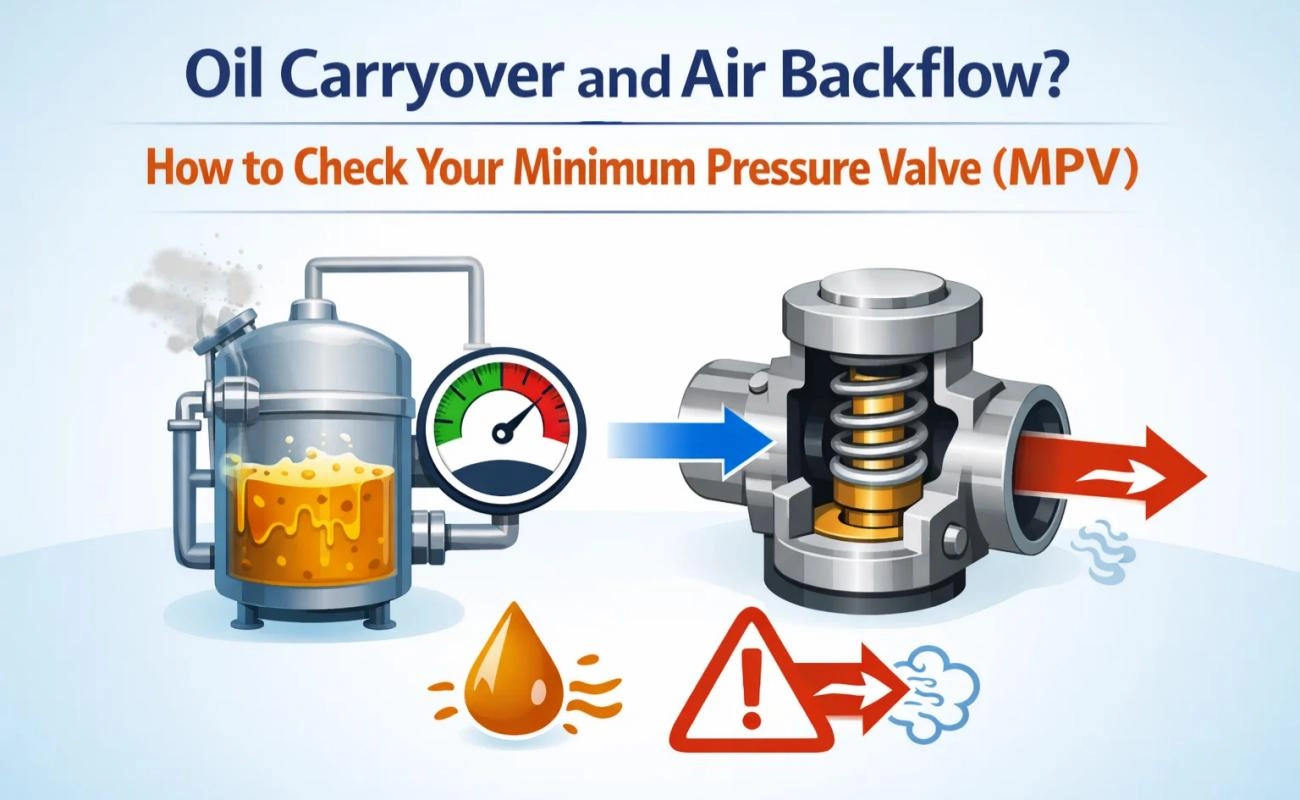
In most rotary screw air compressors, all attention tends to fall on major components such as the airend, filters, or oil separator tank. Yet one of the smallest parts in the entire system quietly determines whether the compressor runs clean, safe, and stable: the Minimum Pressure Valve (MPV).
Often overlooked during maintenance, the MPV plays a decisive role in preventing oil migration, protecting the airend, and maintaining adequate pressure for downstream equipment. When this valve begins to malfunction, operators may notice symptoms like oil carryover, unstable pressure, poor unloading performance, or even frequent high-temperature alarms. Understanding how the MPV works—and how it fails—is essential for anyone responsible for compressed air reliability.
What the Minimum Pressure Valve Really Does
The MPV sits at the air receiver (oil separator tank) outlet and ensures that internal tank pressure rises quickly during start-up. Its core functions can be summarized in three mechanisms:
- Establishing Minimum Working Pressure
During startup, the compressor must quickly build internal pressure to maintain an oil film inside the airend. Without this pressure, the rotors operate in insufficient lubrication, accelerating wear and increasing frictional heat.
The MPV ensures the system does not release air to downstream piping until the tank reaches 0.45–0.55 MPa, depending on the compressor model. - Preventing Oil Carryover
Oil inside the separator tank requires enough internal pressure for proper separation. At low pressure, oil mist fails to condense effectively, allowing droplets to escape downstream.
The MPV guarantees the pressure stays above the separation threshold, making it the last line of defense against oil carryover. - Stabilizing Pressure During Load/Unload Cycles
When the compressor unloads, the MPV maintains back pressure to prevent reverse flow into the separator tank. This protects the system from sudden pressure drops and prevents oil from being sucked into the discharge line.
How the MPV Works: A Practical Breakdown
At its core, the MPV is a spring-loaded, pressure-controlled valve.
Here’s how the cycle functions:
- Start-up:
The valve remains closed until tank pressure reaches the set threshold. During this phase, the compressor builds internal pressure rapidly. - Normal Operation:
Once the pressure is sufficient, the valve opens gradually, allowing compressed air to enter the plant’s piping system. The spring and piston adjust continuously to maintain stable discharge pressure. - Unload Mode:
As system pressure rises toward the unloading set-point, the MPV helps maintain internal tank pressure regardless of downstream conditions.
This simple mechanism gives the compressor stability that sensors alone cannot achieve.
Signs Your Minimum Pressure Valve Is Failing
Although compact, the MPV is exposed to oil vapor, heat, and contaminants every day. Over time, its internal components degrade. Common failure symptoms include:
Unusual Oil Carryover
If operators suddenly observe oil in dryers, pipelines, or pneumatic tools, the MPV is one of the first components that should be checked. A stuck-open valve will allow the separator tank to run below minimum pressure, reducing separation efficiency.
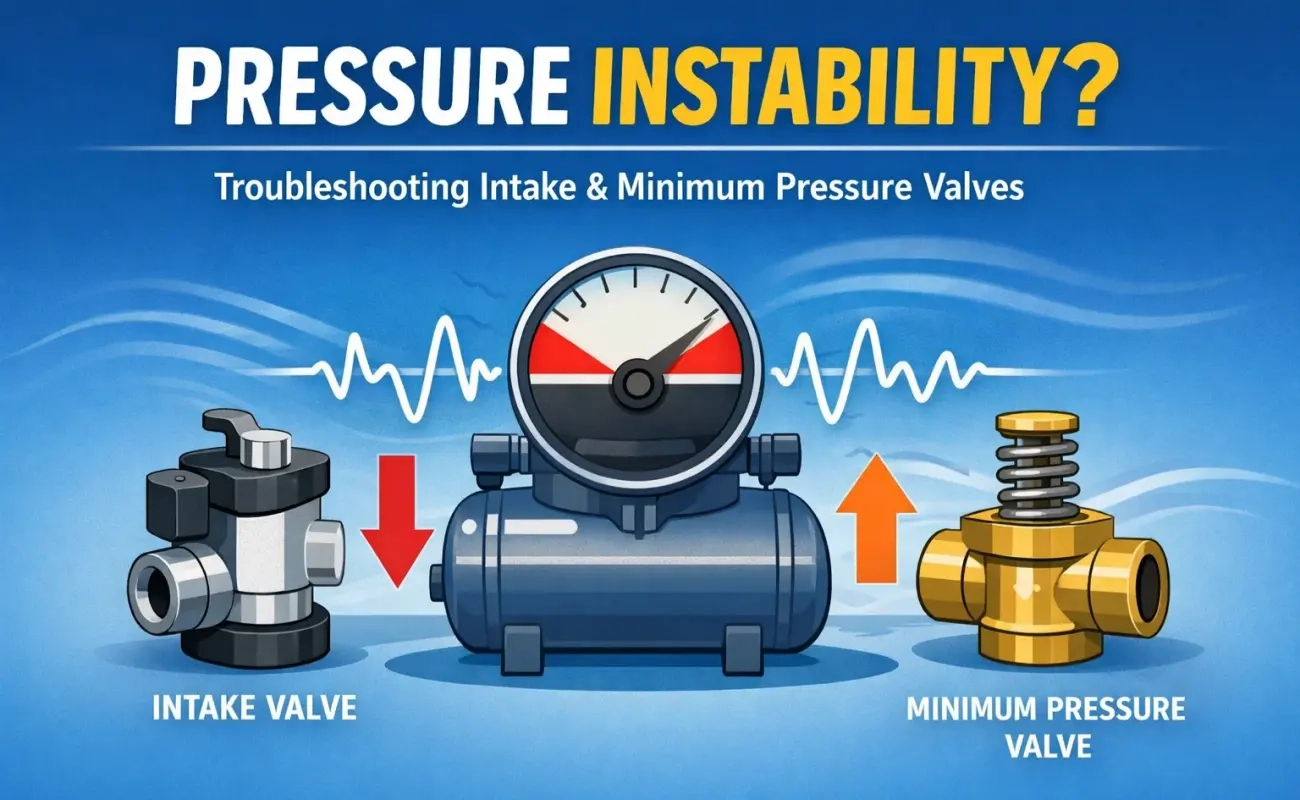
Pressure Fluctuations at Discharge
Frequent pressure swings, especially during loading and unloading cycles, may point to a worn spring or damaged piston inside the MPV.
Slow Pressure Build-Up at Start-up
If the compressor takes longer than usual to reach operating pressure, the valve may be leaking internally.
High Temperature or Overload Trips
Low internal pressure reduces oil circulation efficiency, causing the airend to run hotter. Many “high-temperature” alarms come from MPV-related issues rather than cooling problems.
Common Causes of MPV Malfunctions
Several factors contribute to MPV performance issues:
- Carbon and oil varnish buildup on the valve seat
- Spring fatigue caused by long operating cycles
- Wear on the piston or guide sleeve
- Contaminants from poor oil quality or overdue filter changes
- Incorrect aftermarket replacement valves with inaccurate pressure settings
A poorly manufactured MPV may look identical from the outside but can dramatically alter compressor behavior once installed.
Best Practices for MPV Maintenance and Replacement
To ensure reliable operation, technicians should incorporate the following into their maintenance routine:
- Clean and Inspect the Valve Regularly
Carbon and sludge buildup are the most common failure causes. Cleaning during every service interval prevents most operational issues. - Verify Opening Pressure
Use a calibrated pressure gauge to confirm that the MPV opens within the manufacturer’s recommended range. Deviations can affect oil separation and discharge stability. - Check for Seat Wear or Spring Fatigue
Worn seats cause internal leakage, while fatigued springs lead to early opening or delayed closing. - Use High-Quality OEM or Certified Aftermarket Components
A poorly calibrated valve can compromise the entire system. For compressors operating in harsh environments, higher-grade corrosion-resistant materials are recommended.
Conclusion
Even though the minimum pressure valve is small compared to the airend or oil separator, it plays an outsized role in ensuring stable operation and protecting against oil carryover. A well-maintained MPV keeps internal pressure sufficient for proper lubrication, promotes efficient oil separation, and stabilizes the system during load/unload cycles.
Neglecting this component can lead to costly downtime, poor air quality, and premature equipment wear. By understanding its function and maintaining it properly, operators can significantly extend the life and reliability of the entire compressed air system.