Product Applications

How to Identify and Choose a High-Performance Screw Air Compressor Airend

Screw Air Compressor Airend

In the world of compressed air systems, the screw airend—often referred to as the “heart” of the air compressor—plays the most decisive role in determining efficiency, reliability, and lifespan. Whether in an industrial plant, a workshop, or an energy-intensive facility, the airend directly affects the cost of ownership and long-term productivity. However, not all screw airends are created equal. Understanding how to identify and select a high-performance unit is essential for engineers, maintenance professionals, and purchasing managers alike.

Why the Airend Is the Core of a Screw Compressor

The airend is responsible for compressing the incoming air through the meshing of two helical rotors—male and female—within a precision-machined housing. Its design determines the volumetric efficiency, oil-air separation performance, and energy consumption of the entire compressor.

When the airend runs efficiently, it maintains a stable pressure output with minimal energy loss. On the other hand, even a small defect in the rotor clearance, bearing alignment, or coating can cause efficiency to drop dramatically. In many cases, over 70% of an air compressor’s operating cost over its lifetime is linked to the performance of its airend.

Key Indicators of a High-Performance Screw Airend

Selecting a premium airend requires more than checking the nameplate. The following technical indicators should always be considered:

1. Rotor Profile Design
A well-optimized rotor profile provides smoother compression, lower internal leakage, and higher energy efficiency. Advanced designs such as asymmetric 5:6 rotors (male to female lobe ratio) deliver up to 10% more efficiency compared to traditional symmetric rotors.

2. Machining Precision
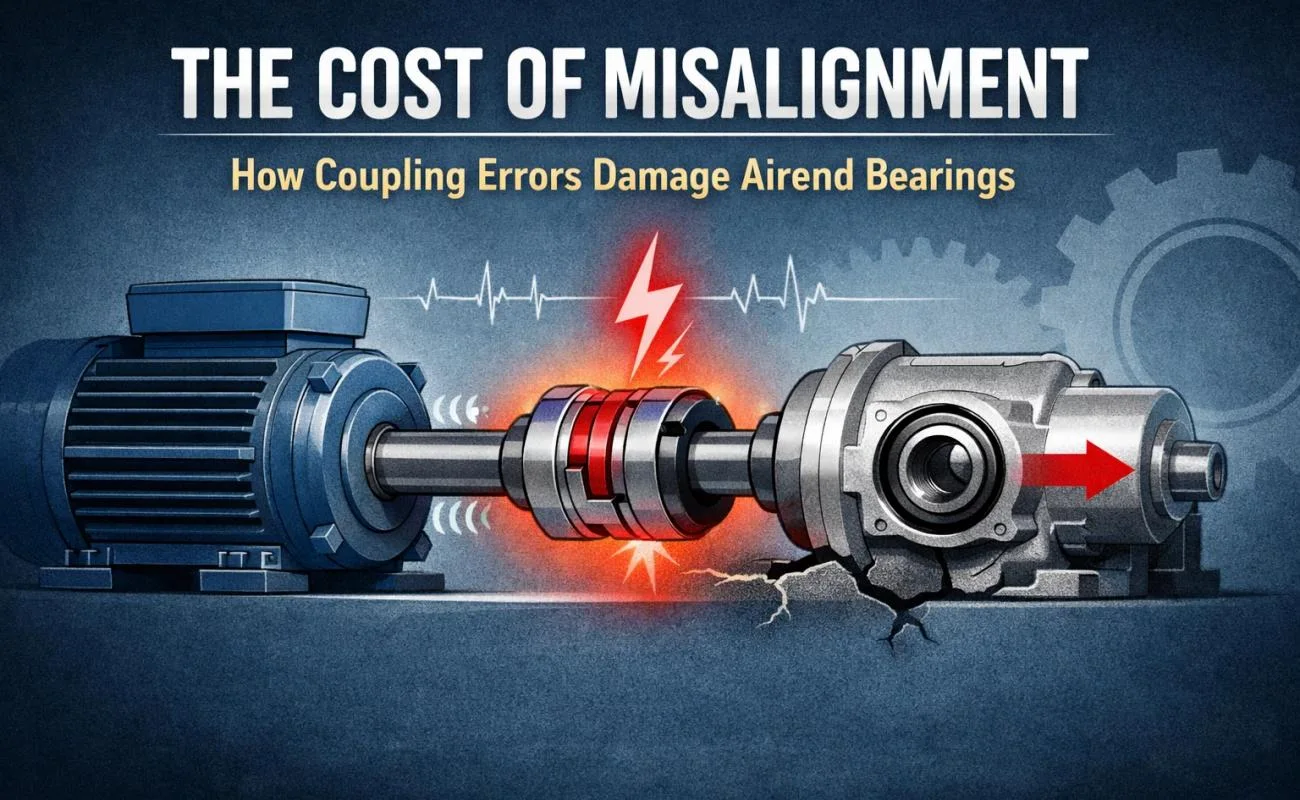
The tolerance level between rotors and casing typically ranges within micrometers. High-end airends are produced with CNC grinding and laser measurement systems to ensure consistent rotor geometry. Poor machining accuracy leads to air leakage and unbalanced load on bearings.

3. Bearing and Sealing Systems
The bearing system must withstand high rotational speeds—often above 3,000 rpm—while maintaining perfect alignment. Premium airends use SKF or FAG heavy-duty bearings combined with high-temperature-resistant oil seals to prevent lubricant leakage and air contamination.

4. Surface Treatment and Coating
Rotor coatings such as Teflon, nickel-phosphorus, or ceramic materials reduce wear and corrosion. This is particularly critical in humid or dusty environments, where corrosion or coating peeling can shorten service life significantly.

5. Energy Efficiency Rating
Modern screw airends are often tested according to ISO 1217 standards. Models with energy-saving profiles and tight internal tolerances can reduce energy consumption by 5–15%, providing a quick payback period through reduced electricity bills.

How to Evaluate Airend Quality in Practice

1. Noise and Vibration
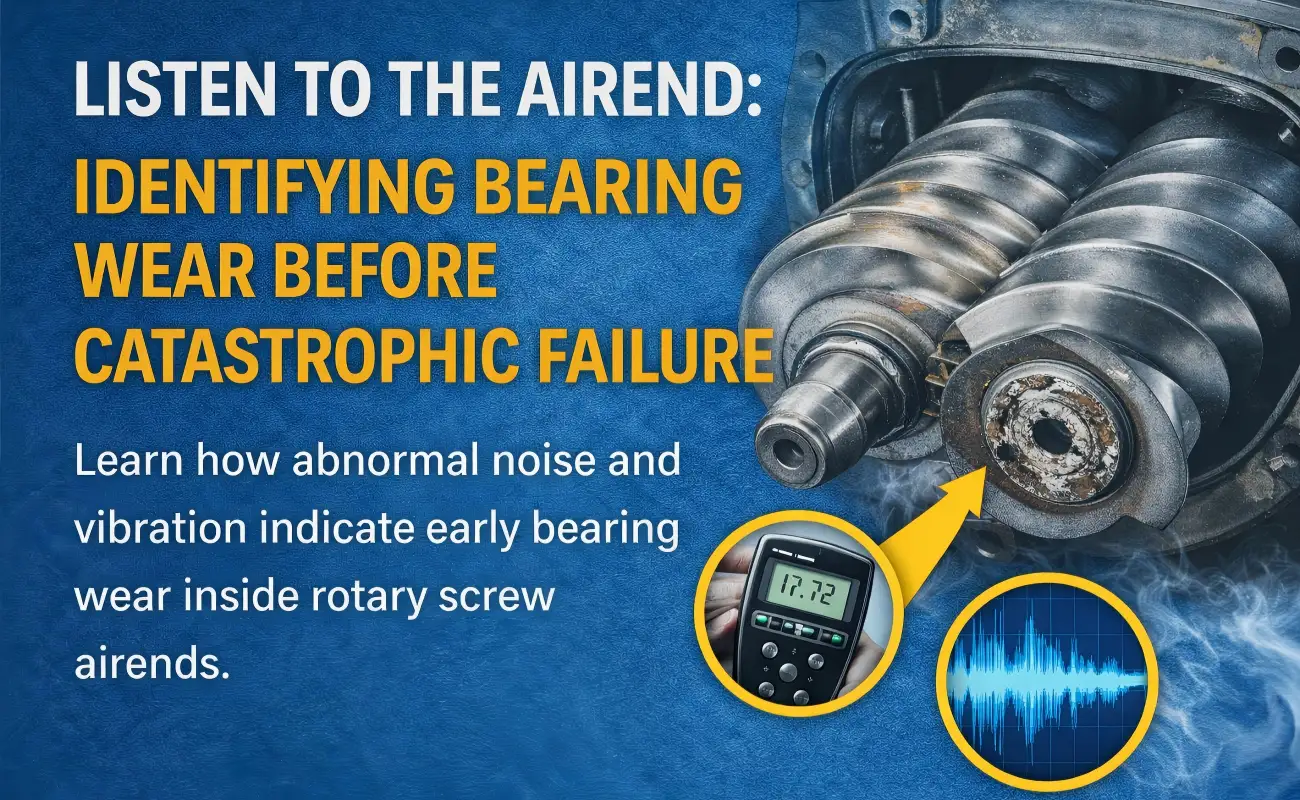
A stable airend produces consistent sound levels without vibration spikes. Excessive noise or vibration usually indicates rotor imbalance, bearing wear, or improper lubrication.

2. Temperature Rise
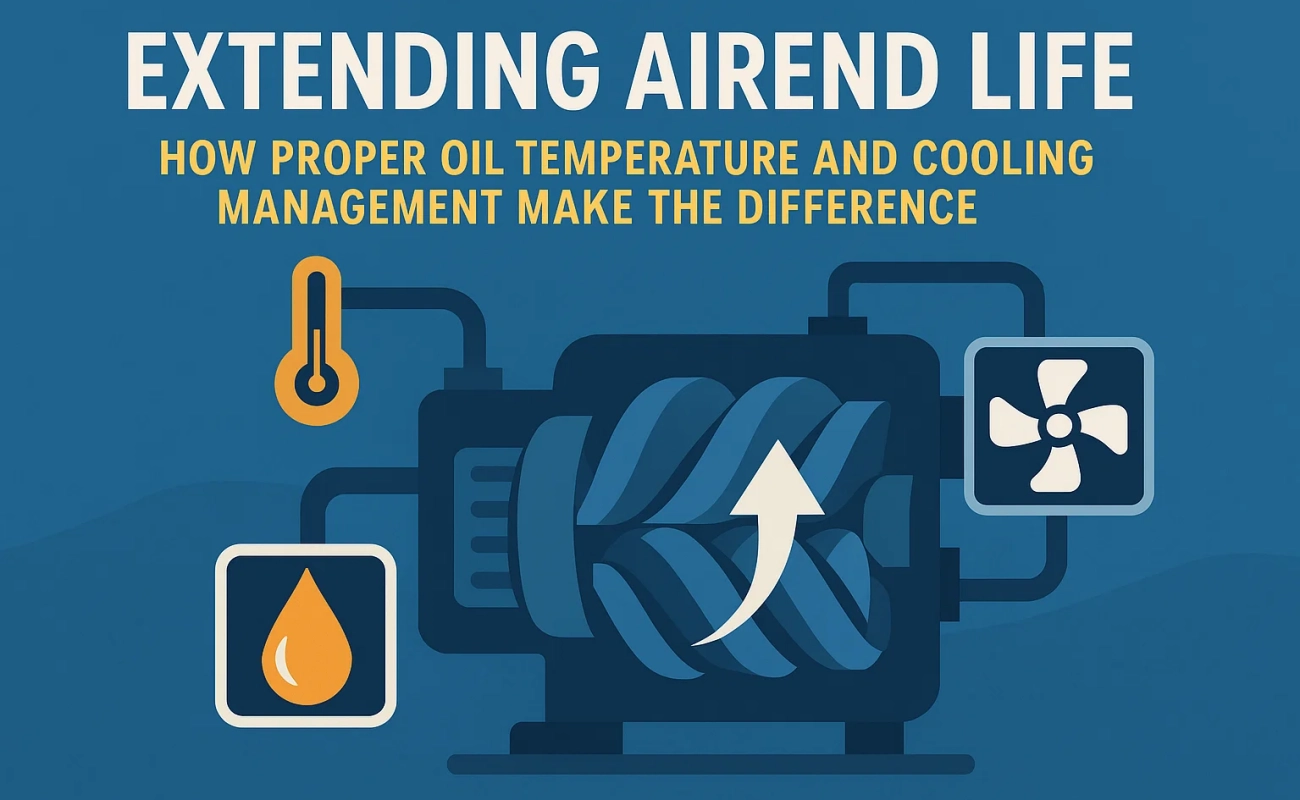
Temperature monitoring during operation helps detect internal friction or sealing issues. Efficient airends maintain lower discharge temperatures, which translates to longer lubricant and component life.

3. Air Leakage and Pressure Stability
Pressure fluctuations often point to internal leakage between rotors or around end seals. A reliable airend will maintain pressure stability even under variable loads.

4. Maintenance Records
Check the manufacturer’s maintenance recommendations and real-world user feedback. Airends from reputable brands typically achieve 30,000 to 40,000 hours before requiring a major overhaul.

Choosing Between OEM and Aftermarket Airends

When replacing or upgrading an airend, operators can choose between OEM (Original Equipment Manufacturer) and high-quality aftermarket options.

OEM Airends ensure full compatibility with existing compressors and guarantee compliance with factory specifications.

Aftermarket Airends, when sourced from experienced manufacturers with precision equipment and ISO-certified processes, can offer equivalent or even superior performance at a more competitive cost.

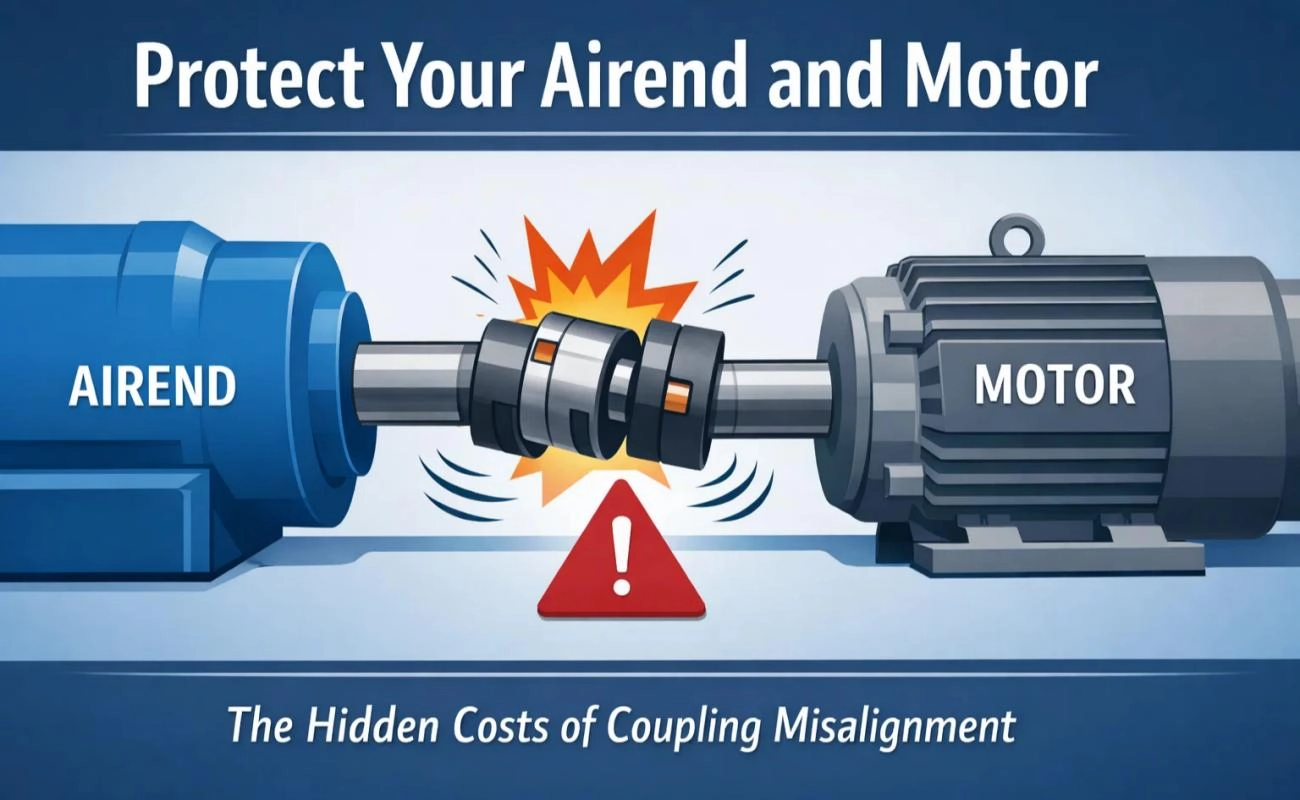
In either case, attention must be given to the matching of rotor size, drive shaft configuration, oil passage design, and cooling layout. Improper matching can cause serious mechanical damage or energy loss.

The Importance of Regular Maintenance and Oil Management

Even the best airend will degrade quickly without proper maintenance. Routine oil analysis, filter replacement, and temperature monitoring are critical to preserving efficiency. Operators should also avoid using incompatible lubricants that can damage seals or degrade rotor coatings.

For long-term reliability, it is recommended to schedule vibration analysis and bearing inspection at least every 8,000 hours of operation. Keeping the intake filter clean and maintaining proper oil levels are the simplest yet most effective measures to extend airend life.

Final Thoughts

In the competitive industrial air market, the screw airend stands as the single most valuable component determining overall compressor performance. By understanding its design features, quality standards, and maintenance needs, operators can make informed decisions that lead to higher efficiency, lower energy consumption, and longer service life.

Choosing the right airend is not just a matter of replacement—it’s an investment in long-term operational stability and cost control. For anyone serious about reliable air supply, knowing the heart of the compressor is the first step toward mastering the entire system.